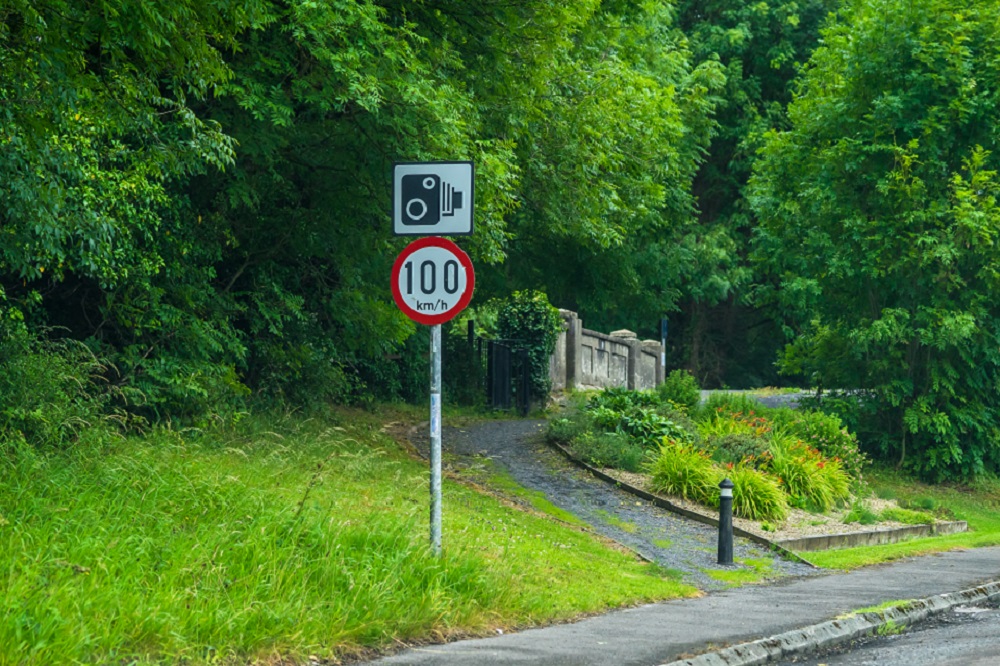
Speed Camera Network To Be Expanded In Attempt To Greatly Reduce Road Deaths

Plans are being put in place to expand Ireland's speed camera network, as part of new strategy to target speeding drivers and reduce deaths on Irish roads.
Last year, 188 people died on Irish roads, which is the highest level of traffic-related deaths in 12 years, with speeding, as well as drug and drink driving named as key factors in many of this fatal crashes.
This new strategy is a direct response to the huge increase in fatalities on Irish roads and European data has confirmed that the use of cameras has significantly reduced speeding and has enhanced road safety.
It will see Transport Infrastructure Ireland assume responsibility for An Garda Síochána for speed cameras. But Gardaí will still be able to prosecute camera-detected speeding and driving offences. The system is to focus on roads with known speed problems.
Gardaí are to operate the blueprint for this strategy along with TII and the National Transport Authority, who will have primary responsibility, in terms of management and enforcement functions, as well as for urban traffic management offences.
View this post on Instagram
So far, Ireland has more than 1,900 safety camera zones, with 390 of these unveiled last January.
Speaking about the strategy, Road Safety Minister, Seán Canney has said it will be deployed across urban and rural areas.
“Tragically, we have seen an increase in serious injuries and fatalities on our roads in recent years,” he said. “The use of safety cameras has been proven to reduce speeding and improve driver behaviour, and I am confident that safety cameras can help us achieve our road safety targets, including working towards Vision Zero".
"promote better and safer driver behaviour"
On this strategy, Justice Minister Jim O'Callaghan has said that these camera systems have enhanced road safety enforcement.
“Effective enforcement is a key pillar of road safety and this strategy provides a clear framework to strengthen the use of safety cameras in a way that is targeted, evidence-led and proportionate,” he said.
“Improved detection and enforcement of road traffic offences will promote better and safer driver behaviour and help protect road users".
The minister went on to say that local authorities will also have a key input into the Camera Enforcement Group (CEOG).
This group are to co ordinate the activities of all agencies involved in camera operation, ensuring maximum effectiveness of the deployments. They will also analyse and report on all performance data, including payment rates and compliance.
Last year, Ireland South MEP, Cynthia Ní Mhurchú called for a "get tough approach" to speeding, and for an explanation as to why revenues from speed vans decrease by nearly 16% between 2023 and 2024. She also warned that one in three road deaths in Ireland are either directly or indirectly linked to speeding.
In the past 18 months, almost half of road deaths in Ireland have involved vulnerable road users, including pedestrians, bikers, cyclists, and e-scooter riders.
It was also revealed via a survey that 12% of drivers have admitted to driving after drinking alcohol in the last 12 months, while one in four think driving short distances after having a drink is acceptable.
It was also found that 23% have said they may have been over the limit when drivng in the morning after a night out.
This comes a month after it was announced that the Road Safety Authority had warned that a driving test could be cancelled if a learner driving fails to bring the corrected documentation. The new rule came into effect from March 9.
More on this from Nova here.
