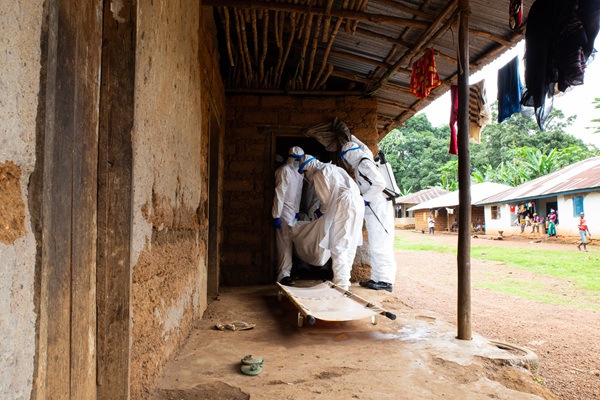

A total of 246 suspected cases of Ebola virus have been identified in the DRC. The African Centres for Disease Control and Prevention has warned that the outbreak poses a high risk of spreading further across the region.
In neighbouring Uganda, one man has died from Ebola. However, the Ugandan Ministry of Health stated, “This is an imported case from DRC. The country has not yet confirmed a local case,” and reassured the public that there is currently no need for widespread concern.
Officials confirmed that the man in Uganda was infected with the Bundibugyo strain of Ebola. Although this strain is not considered the most lethal form of the virus, there is currently no approved vaccine available for the Bundibugyo variant.
The World Health Organization (WHO) has announced that it will increase support in the affected areas, noting the region’s high population density and ongoing humanitarian challenges. The WHO also acknowledged that the DRC has significant experience in managing Ebola outbreaks.
“With the insecurity, people are crowded together in the city, and since there are so many people in the city, an epidemic like this would be very serious,” said Anne-Marie Dive, a resident of Bunia, the main city in Ituri province where the outbreak is taking place.
The Bundibugyo strain of the Ebola virus has a mortality rate of approximately 32%. Symptoms include fever, general body pain, weakness, vomiting, and in some cases, bleeding.
The WHO states that “Ebola disease is a severe and often fatal illness transmitted through direct contact with the blood, secretions, organs or other bodily fluids of infected people, as well as contaminated surfaces and materials. Early detection, supportive treatment and rapid public health measures significantly improve survival and are critical to stopping transmission.”