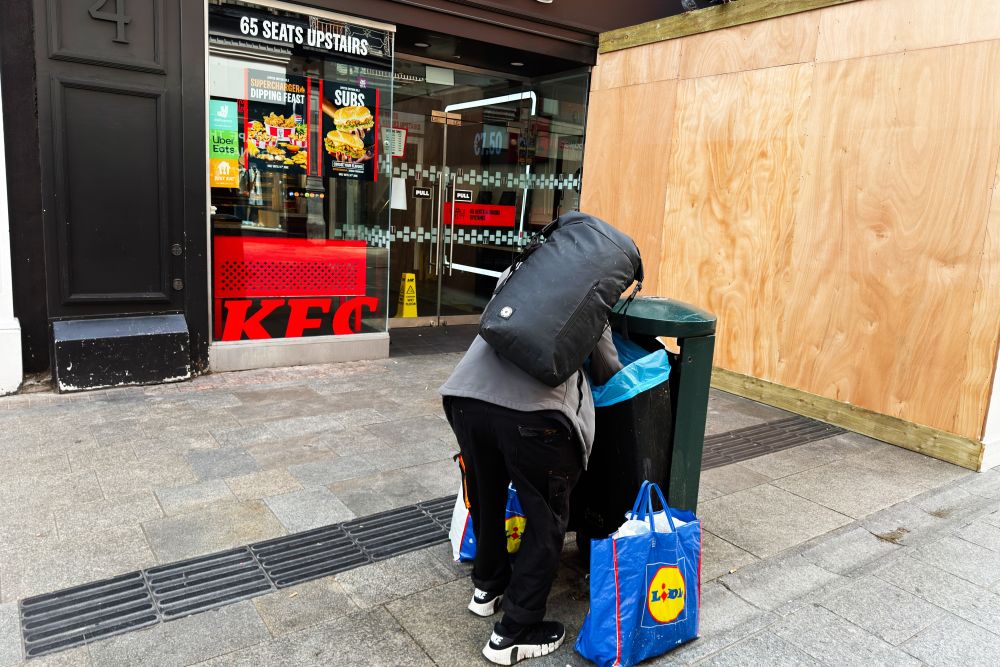

Dublin City Council is facing additional costs of almost €1,000 a day as people search public bins for deposit-return bottles and cans, according to an internal council briefing.
The activity, which has increased since the introduction of the Deposit Return Scheme (DRS), is causing damage to public litter bins, leaving rubbish scattered across streets and placing additional demands on cleaning crews.
A briefing prepared for Dublin City Council chief executive Richard Shakespeare by head of waste management services Barry Woods estimated that the council was spending €996 during each 24-hour cleaning cycle dealing with the consequences of what it described as scavenging.
The document, dated June 3rd and released under the Freedom of Information Act, said public bins were being systematically targeted by people looking to retrieve containers that could be returned for a deposit.
Woods said five or six workers from a team of approximately 50 were being taken away from their normal duties for an hour during each eight-hour shift to deal with the resulting mess.
The cost of diverting those workers was estimated at €332 per shift, amounting to €996 over a full 24-hour cleaning cycle.
“Public litter bins across the city are being interfered with daily,” Woods wrote.
He said locks and access mechanisms were being damaged, while the contents of bins were being emptied onto surrounding footpaths in an effort to find bottles and cans eligible for a refund.
The briefing said the practice was contributing to increased litter on city streets, repeated cleaning of areas that had already been serviced and additional damage to waste infrastructure.
The council has introduced bin surrounds at some locations, allowing members of the public to leave deposit containers separately rather than placing them inside general waste bins.
However, Woods said the measure had so far had “limited impact”, with the structures often being used for ordinary waste such as coffee cups and cigarette litter.
He said the surrounds were “not fulfilling their intended function”.
The council has also spent €115,000 replacing locks on 116 Bigbelly bins across the city in an effort to prevent access to their contents.
According to the briefing, the financial costs were likely to continue “unless a solution is reached to this problem”.
The report also warned that the consequences went beyond the immediate cost of cleaning and repairing bins.
Among the wider concerns identified were the visual impact of scattered waste, potential damage to Dublin's reputation, a reduced perception of cleanliness and safety, and possible effects on tourism and visitors to the city.
“While difficult to quantify, these reputational impacts may have longer-term economic consequences for the city,” Woods said.
The Deposit Return Scheme was introduced to encourage the recycling of drinks containers by placing a refundable deposit on eligible plastic bottles and aluminium cans.
Re-turn, which operates the scheme, said it was working with Dublin City Council on measures to address the issue.
A spokeswoman said the organisation was engaging with the council “to support the shared objective of cleaner streets, higher recycling rates and practical solutions that work for Dublin city”.
A Dublin City Council spokesman said the figures contained in the briefing were based on a “very detailed report” and were “accurate”.