
Dublin’s north-west suburbs are set to receive a disproportionately small share of capital investment over the next three years, according to the city council’s latest spending plan.
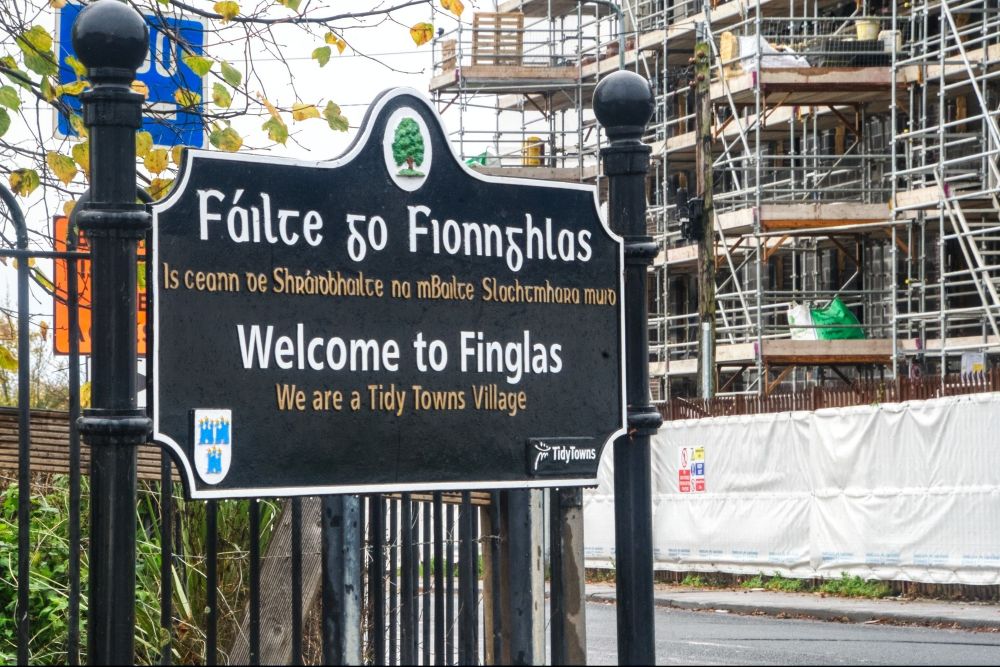
According to the Dublin Inquirer, figures from Dublin City Council’s 2026–2028 capital programme show that Ballymun and Finglas – grouped within the North West Area – will receive just 2 percent of funding allocated to projects outside of housing. While the area has a smaller population than other parts of the city, it still ranks last in overall allocation, even when that is taken into account.
In contrast, the South East Area – which includes Kimmage-Rathmines, Pembroke, and the South-East Inner City – is due to receive 28 percent of the same funding pot, placing it at the top of the distribution.
The stark gap has sparked debate among councillors, with differing views on whether the imbalance reflects deeper structural inequalities or more practical factors such as project timelines and geographic boundaries.
Social Democrats councillor Mary Callaghan described the disparity as deeply concerning. “It is absolutely not acceptable,” she said, pointing to long-standing deprivation in the North West Area.
Independent councillor John Lyons, who represents the North Central Area, suggested that systemic issues may be at play. “There are more powerful interests, there are our own unconscious biases,” he said. “Areas with communities facing severe disadvantage don’t get the same time and attention as more affluent parts of the city.”
Dublin City Council chief executive Richard Shakespeare acknowledged the imbalance but said there was no deliberate policy behind it. “In terms of investment, the North West doesn’t do well. I don’t know why,” he said, adding that the issue could be reviewed. “It’s nothing conscious from me. It could be a legacy of projects that have continued rolling on over time.”
However, not all councillors agreed that the figures tell the full story. Labour councillor Dermot Lacey argued that analysing investment purely by administrative area risks oversimplifying a more complex picture.
“You have to look at the context,” he said, noting that some projects may sit just outside area boundaries or that seemingly affluent districts can still contain pockets of deprivation.
Despite those explanations, Callaghan said she remains unconvinced. “I’m trying to get my head around it,” she said. “Why is it that my area is particularly left behind?”
Concerns were also raised about how the capital programme is developed. Several councillors criticised the current process, saying it is largely drawn up by council officials with limited formal input from elected representatives, an approach they argue reduces transparency and accountability in how funding decisions are made.