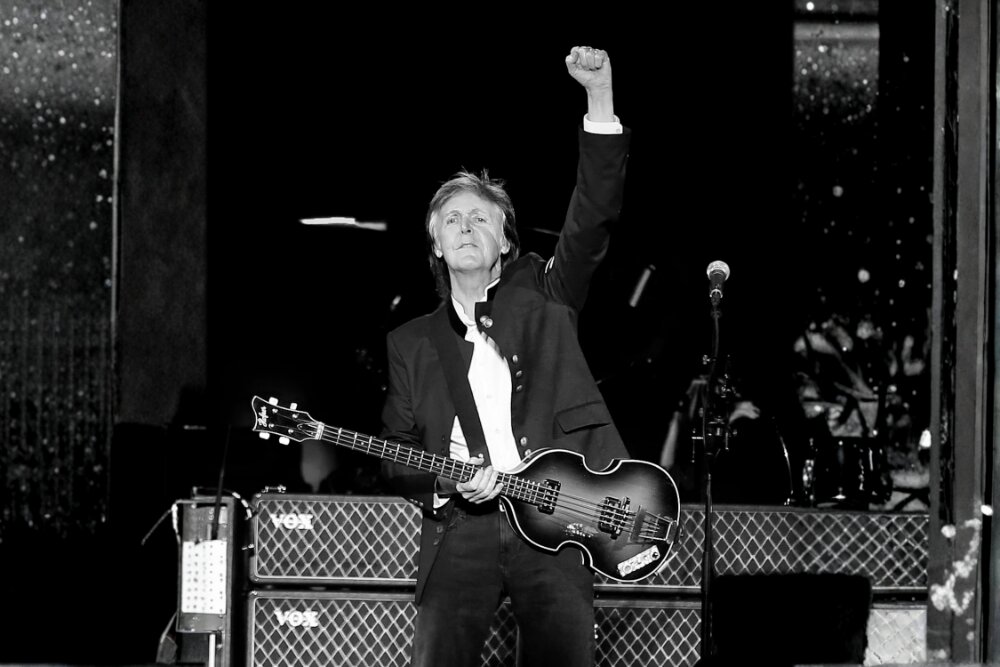

Sir Paul McCartney has charmed fans with his wit, humility, and timeless storytelling in a sit-down for WIRED’s Autocomplete Interview, where he addressed some of the most searched questions about his life and career — from his famous nickname “Macca” to the true story behind the Beatles’ enduring anthem Let It Be.
In the viral video, the 82-year-old music legend answers everything from how he got his nickname to why he still tours the world more than six decades after the Beatles first changed popular music forever. But one question in particular — “Did Paul write Let It Be?” — led to one of the most moving moments in the interview, as McCartney revisited the dream that inspired the song.
When asked how the song came about, McCartney said: “I had a dream. My mother, who died ten years previously, came to me in my dream. She said, don’t worry, it’s going to be fine. Just let it be. I woke up and was just remembering that dream — what did she say? She said, let it be? So I thought that was a great idea for a song.”
The song, which went on to become one of The Beatles’ most beloved hits, was written in 1968 during a tense and uncertain period for the band. McCartney’s mother, Mary, had passed away when he was just 14 years old, and the dream — which came to him while the group was dealing with creative differences and exhaustion — offered a moment of clarity and comfort.
Released in 1970 as the title track of their final studio album, Let It Be has since become one of the most recognised and emotional songs in rock history. Its simple message of peace and acceptance struck a chord with generations of listeners, and its origins in a dream about McCartney’s mother only deepened its resonance.
For Irish audiences — many of whom grew up with Beatles records passed down through families — Let It Be holds a particular sense of nostalgia. It’s a song that feels almost universal, and hearing McCartney still speak about it with such warmth reminds fans of why the Beatles’ music endures more than 60 years after their formation.
Beyond Let It Be, McCartney took the opportunity to clear up a few long-standing questions. Asked about his nickname, he explained that “Macca” comes from a typically British — and particularly Liverpudlian — habit of shortening surnames and adding a friendly twist. “Everyone in Liverpool does that. McCartney became Macca. Simple as that,” he laughed.
He also addressed a fan-favourite question about whether The Beatles ever played at Woodstock, smiling as he gently corrected the misconception. “No, we didn’t. We were breaking up around then, actually. It would’ve been great, though,” he said with a grin.
It’s moments like these — the effortless humour, the vivid recollections, the natural storytelling — that remind audiences why McCartney remains such a singular figure in popular culture. He is not only one of the most successful songwriters in history, with 32 songs reaching number one on various charts, but also one of the few living links to a time when music truly transformed the world.
Formed in Liverpool in 1960, The Beatles — McCartney, John Lennon, George Harrison, and Ringo Starr — became a global phenomenon within just a few years. Their groundbreaking approach to songwriting, recording, and performance reshaped the very idea of what a pop band could be. From the early rush of She Loves You and A Hard Day’s Night to the experimental brilliance of Sgt. Pepper’s Lonely Hearts Club Band, their influence still ripples through modern music.
Even after the band’s breakup in 1970, McCartney continued to push creative boundaries. His post-Beatles band Wings, formed with his late wife Linda McCartney, produced hits such as Band on the Run, Live and Let Die, and Jet, further cementing his legacy as one of the most versatile artists of his generation. In recent years, he’s remained remarkably active — releasing solo albums, collaborating with younger artists, and touring the world to sold-out stadiums.
In the WIRED interview, McCartney’s warmth and humour stood out as much as his stories. He poked fun at himself, reminisced about his friendship with Lennon, and mused on how strange it feels to be the subject of endless online searches. “It’s funny, isn’t it? People can just type your name in and suddenly there’s a million questions,” he said. “It’s nice, though. It means they’re still interested.”
And clearly, they are. McCartney’s ability to connect — whether through a tender story about his mother or a cheerful anecdote from the height of Beatlemania — remains unmatched. Decades on, he’s still capable of turning an internet interview into something heartfelt and deeply human.
For those who grew up listening to Let It Be, hearing McCartney explain how a dream became a timeless song feels like a gift. It’s a reminder that behind every global hit lies something deeply personal — a feeling, a memory, a moment of inspiration. And as McCartney once again proves, some stories are simply too beautiful not to tell.