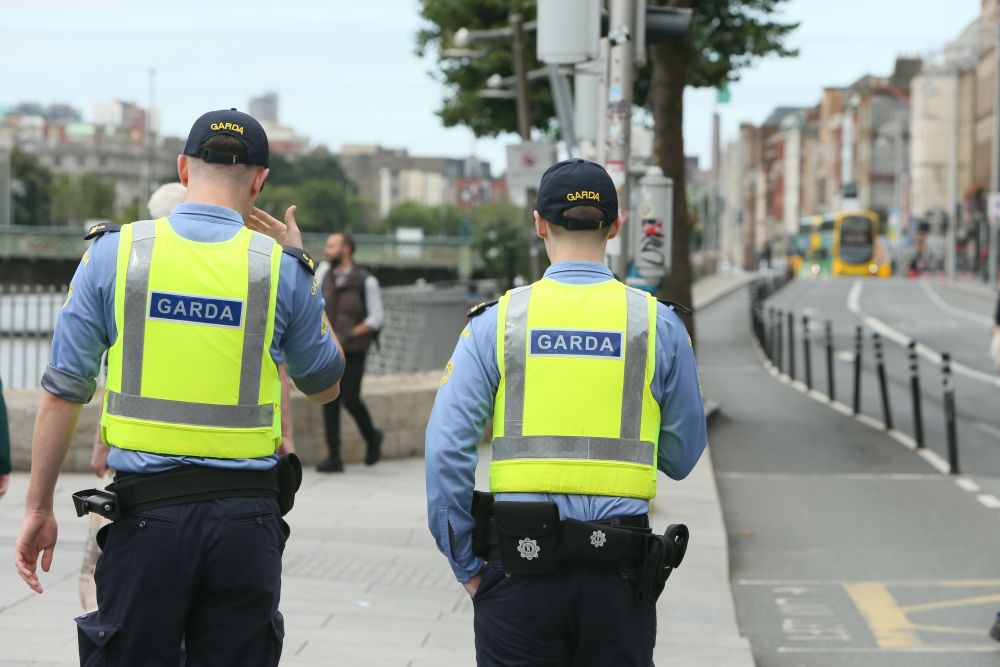

An Garda Síochána is preparing to introduce body-worn cameras across the country as part of a major €150 million investment aimed at modernising policing and strengthening accountability.
The nationwide rollout follows a successful pilot programme conducted in Dublin, Limerick and Waterford, where thousands of recordings were assessed to evaluate the technology's effectiveness and determine the infrastructure needed for wider deployment.
Body-worn cameras, which record both video and audio, can be attached to a garda’s uniform and activated during incidents when officers believe recording is necessary.
The move has been welcomed by the Garda Representative Association (GRA), with its president Niall Hodgins describing the expansion as a significant step forward for frontline policing.
“This is good news for An Garda Síochána and our members,” Hodgins said.
Speaking about the benefits of the technology, he noted that the cameras improve officer safety while also providing reliable evidence of incidents and interactions.
“They enhance frontline safety and provide indisputable digital evidence,” he said. “They also help build public confidence by accurately capturing interactions between gardaí and members of the public.”
According to Hodgins, officers involved in the trial observed that the presence of cameras often helped reduce tensions during encounters.
“When the cameras are activated, there is often an instant de-escalation of situations,” he said. “If matters do escalate, the footage captures the exact temperature of the event.”
He added that the recordings offer greater transparency regarding police conduct.
“Whether a situation escalates or de-escalates, what we have then is enhanced accountability for our members’ actions,” he said.
The GRA also believes the technology could lead to a reduction in complaints made against gardaí by providing an objective record of incidents, potentially assisting investigations carried out by the policing watchdog, Fiosrú.
While the overall project is valued at €150 million, a substantial portion of the funding will be directed towards the creation of a digital evidence management system. The platform will be responsible for securely processing, storing and managing footage recorded by officers nationwide.
Hodgins stressed that the handling of recordings would be subject to strict safeguards.
“There will be strict controls around the use of biometric data and recorded footage,” he said.
The trial programme involved five Garda stations: Store Street, Pearse Street and Kevin Street in Dublin, Henry Street in Limerick, and Waterford Garda Station. The initiative included cameras, charging equipment, secure data hosting, officer training, maintenance services and software integration with existing Garda systems.
The proof-of-concept phase began in Dublin in May 2024 before expanding to Limerick and Waterford later that year. By the end of 2024, almost 6,000 recordings had been reviewed as part of the evaluation process.
A public consultation on the use of body-worn cameras was launched in December to ensure the technology is introduced in line with best policing practices while respecting privacy and civil liberties.
Minister for Justice Jim O'Callaghan has previously described body-worn cameras as an important tool for modern policing.
“Body-worn cameras are part of the modern equipment and technology that gardaí need as they work to protect communities and save lives,” he said.
The minister also signalled his support for a full national rollout, alongside the development of the new digital evidence management system that will underpin the programme.
The nationwide deployment is expected to mark one of the most significant technological upgrades undertaken by An Garda Síochána in recent years, with supporters arguing it will improve safety, accountability and public confidence in policing.