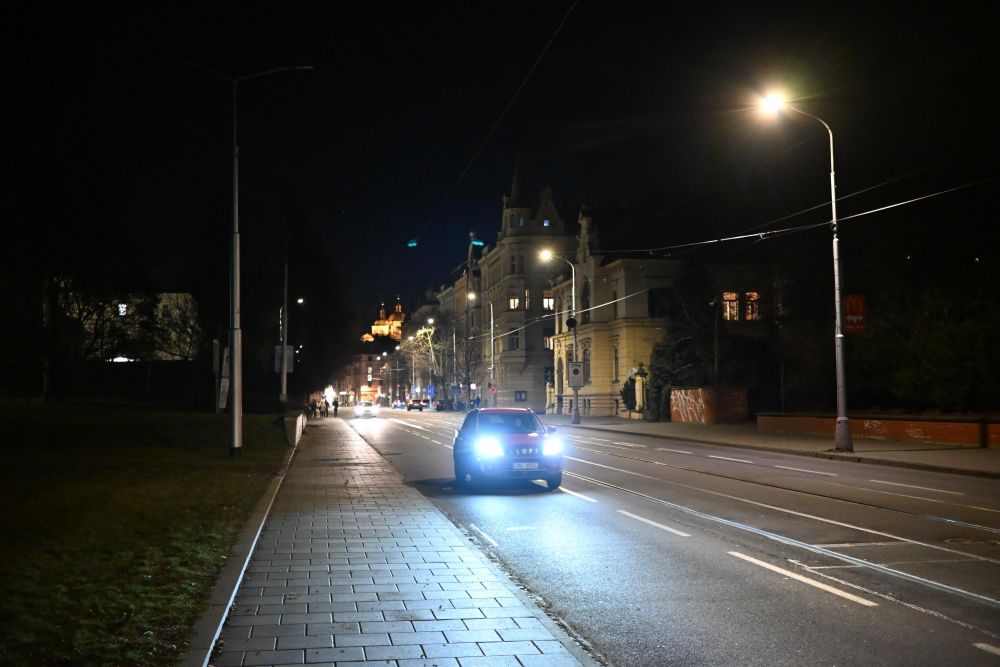

Drivers are being warned about the dangers of increasingly bright vehicle headlights, with new research revealing that glare is making it harder to see road hazards, judge oncoming traffic and identify road signs.
Research commissioned by the RAC found that 83% of drivers are concerned about the impact of headlight glare on their driving as darkness falls earlier, while 76% of those affected believe the problem is getting worse.
The survey highlights the potential safety risks associated with modern vehicle lighting, with some drivers reporting that they have been temporarily blinded by approaching vehicles.
Among motorists who experience glare, half said excessively bright headlights make it more difficult to spot hazards on the road. Almost the same proportion reported struggling to see road signs and markings.
Meanwhile, 47% said glare made it harder to judge the position of oncoming vehicles, while 43% found it difficult to assess their speed and distance.
More than a third of affected drivers, or 35%, said they had been temporarily blinded by bright headlights. A further 14% reported narrowly avoiding a collision as a result of glare.
The problem is also affecting drivers' ability to recognise other vehicles' signals. Almost two-thirds of respondents who experience glare said they struggle to see flashing amber indicators on some oncoming vehicles because of the brightness of their headlights.
However, the effects are not confined to road safety. The RAC's findings suggest that headlight glare is influencing whether some people feel comfortable driving after dark, potentially restricting their independence and social lives.
Around one in five drivers affected by glare said they planned to reduce their driving once the clocks go back because of the problem. A further 3% said they intended to stop driving at night altogether.
Among people who have already reduced or stopped driving after dark, 28% said they see friends less often, while 20% reported seeing their families less frequently. Some 21% said they felt considerably more isolated as a result.
The research also identified concerns about access to healthcare, with 6% of those who had cut back on night-time driving saying they had cancelled medical appointments because of difficulties travelling in the dark. The same proportion said they had postponed appointments.
Pedestrians, wheelchair users and cyclists are also experiencing the effects of bright headlights. More than half of respondents, or 57%, said they had been dazzled by vehicle lights while walking or using a wheelchair, while 20% reported experiencing glare when cycling after dark.
Parents and carers expressed particular concern about the risks to children during the darker months, with 77% saying they were worried about their children's safety because of dazzling headlights.
The findings come after an independent study commissioned by the UK Government confirmed last year that certain brighter modern headlights were more likely to cause glare for other drivers.
Further research into the issue is expected to begin following a commitment made in the Government's Road Safety Strategy in January. Work is also continuing internationally on regulations governing vehicle lighting.
The RAC is calling for efforts to address glare from vehicles already on the road, as well as ensuring future models do not create similar problems.
Its survey found that 73% of drivers believe further research should consider both existing vehicles and those yet to be introduced, while just 14% said investigations should focus exclusively on future models.
RAC senior policy officer Rod Dennis said the return of darker evenings would once again expose millions of motorists to the problem.
“Our latest figures uncover an uncomfortable irony: the very headlights that illuminate the road for drivers and keep them safe could be doing the polar opposite for others by temporarily blinding them,” he said.
He added that the issue was leaving some motorists feeling less confident behind the wheel and, in certain cases, discouraging them from driving at night altogether.
Mr Dennis said the impact on people's lives should not be underestimated, arguing that drivers wanted to see meaningful action to reduce glare.
While welcoming the Government's commitment to further research, he said motorists would expect that work to lead to practical changes addressing their concerns.
He stressed that effective headlights remained essential for road safety, but said this should not come at the expense of other road users.
“We don't feel vehicle lighting regulations sufficiently consider the effects of very bright lights on other road users,” he said.
The RAC believes further work is needed to establish how much light is necessary to provide drivers with a clear view of the road without dazzling those approaching from the opposite direction.
Mr Dennis said the organisation would continue working with campaign partners to ensure drivers' experiences were heard by policymakers as discussions over future lighting standards continue.