
Some buildings accumulate history. Others seem to absorb it, layer by layer, until the walls themselves feel heavy with memory. Boleskine House, the remote manor overlooking Loch Ness, belongs firmly in the latter category.
For the first time in roughly 260 years, the historic Scottish property will open to the public this April, following a painstaking six-year restoration. The announcement brings an end to a long recovery period after devastating fires in 2015 and again in 2019 left the building gutted and at risk of being lost entirely.
Instead, Boleskine has been rebuilt, not sanitised, not reinvented, but restored, with its long, unsettling past very much intact.
The Grand Opening Weekend will take place on April 10 and 11, with self-guided tours beginning April 13. According to Keith Readdy, chairman of the Boleskine House Foundation, the moment represents far more than a ribbon-cutting ceremony.
“The Grand Opening will be less about a single moment of completion and more a celebration of a long journey,” Readdy told The Inverness Courier. “The April weekend marks the first time in roughly 260 years that the finished building is publicly accessible, a thank you to the volunteers, craftspeople, contractors and public supporters who've made this six-year restoration possible.”
Boleskine’s reputation predates its most famous residents. Long before musicians and occultists entered the story, the house was already bound to folklore. It sits near the site of an old church destroyed in the 1600s, with a graveyard that once extended beneath the property itself.
In 1899, the house was purchased by Aleister Crowley, who chose the isolated location specifically for ritual work. During his time there, Crowley reportedly conducted ceremonial magic intended to summon spiritual entities, rituals he later admitted he never fully completed. His residency cemented the manor’s place in modern occult mythology.
Decades later, the house found another infamous owner.
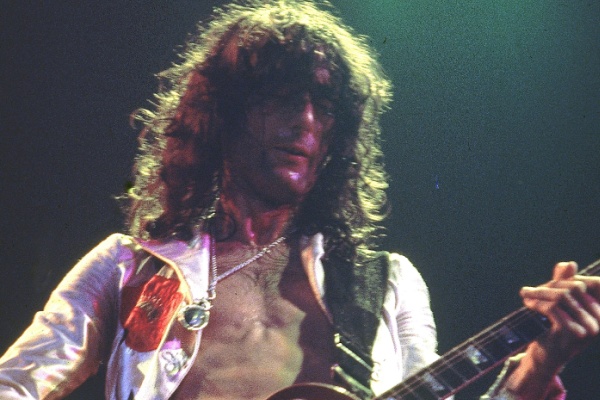
Jimmy Page, guitarist of Led Zeppelin, purchased Boleskine in 1971. Page’s fascination with Crowley was well documented, quotes from the occultist were even etched into early pressings of Led Zeppelin III. But when Page acquired the property, its darkness was already well established.
“The bad vibes were already there,” Page told Rolling Stone in 1975. “A man was beheaded there and sometimes you can hear his head rolling down. I haven't actually heard it, but a friend of mine, who is extremely straight and doesn't know anything about anything like that at all, heard it.”
The incident, Page explained, began as something mundane.
“He thought it was the cats bungling about… and they said, ‘The cats are locked in a room every night.’ Then they told him the story of the house.”
Page added: “Of course, after Crowley there have been suicides, people carted off to mental hospitals.”
Though he rarely stayed there himself, the property was overseen by his friend Malcolm Dent, who once claimed he encountered an unidentified presence he described simply as “pure evil”. Page sold the house in 1991.
Now, decades later, Boleskine House re-emerges not as a curiosity stripped of context, but as a preserved site where history, belief and myth overlap uncomfortably. The restoration includes a tribute to Page’s connection to the manor, acknowledging that its story cannot be told without him.
Visitors won’t just be walking through a building.
They’ll be stepping into a place that has survived obsession, fire, faith and fear, and somehow endured long enough to tell its story.