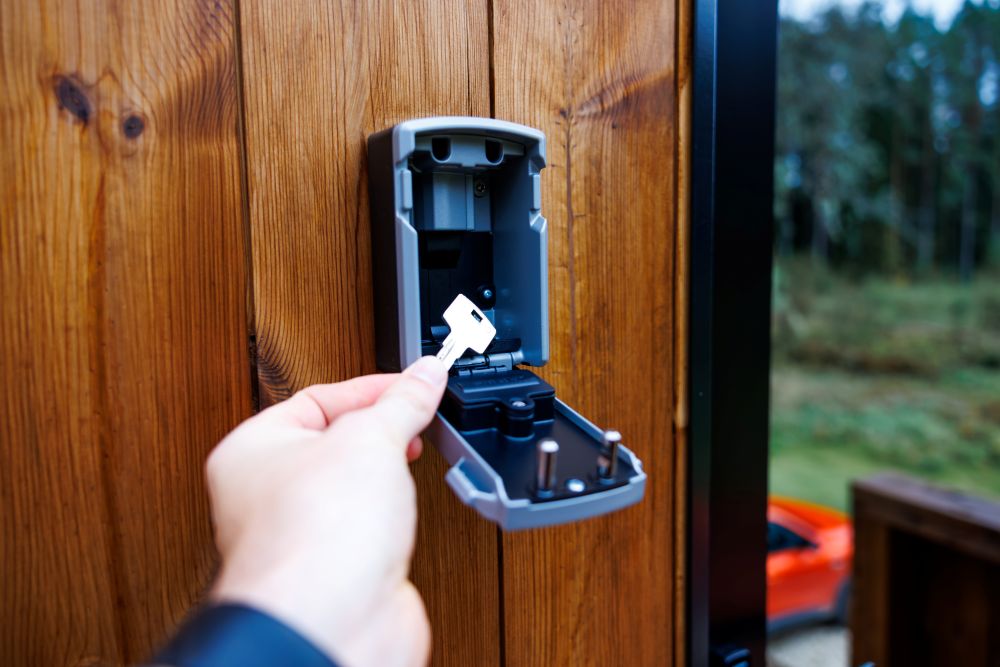

More than 200 lockboxes used by holiday-let operators to provide guests with access keys have been removed from streets across Dublin city since an enforcement campaign began last year.
Dublin City Council began removing the boxes in April 2025, citing health and safety concerns, particularly the risk of pedestrians tripping or falling over devices attached to public infrastructure.
The council said self-check-in lockboxes had become increasingly common among short-term accommodation providers, allowing guests to collect keys using a code rather than meeting their host in person.
While such boxes can be fixed to private walls near property entrances, the council said operators in Dublin were increasingly attaching them to bike stands and street-sign poles in public areas.
By the beginning of June, 222 lockboxes had been removed and sent for shredding, with the council saying the enforcement work had cost less than €5,000.
The authority said there had been “a slight decrease in lockbox presentations” since the campaign began, although officers had also encountered a persistent problem with boxes being put back after removal.
The highest number of removals has taken place in Dublin’s southeast and central areas, but the council said enforcement would continue across the city.
Independent councillor Mannix Flynn backed the crackdown but argued that removing the boxes alone would not address the wider issue of unregulated short-term accommodation.
He said some operators were simply moving the boxes to less visible locations, including side streets, to avoid detection.
Flynn also questioned why the council was destroying the boxes without first examining them for information that could potentially identify the properties or operators using them.
“They clip them off and then they take them to be destroyed, so they’re not investigating anything in the lockboxes,” he said.
He called for a more proactive approach, including the possibility of a covert operation in cooperation with the Revenue Commissioners to investigate properties being used for short-term letting.
“Many of these places are being let without any planning permission, that’s the issue for the council,” Flynn said, adding that Revenue could also have an interest in the income generated by the properties.
He argued that councils should treat the practice as more than a street-cleaning issue, describing it as “a commercial activity, a shadow industry” that warranted greater investigation.
“We need to figure out exactly what’s going on here,” he said.