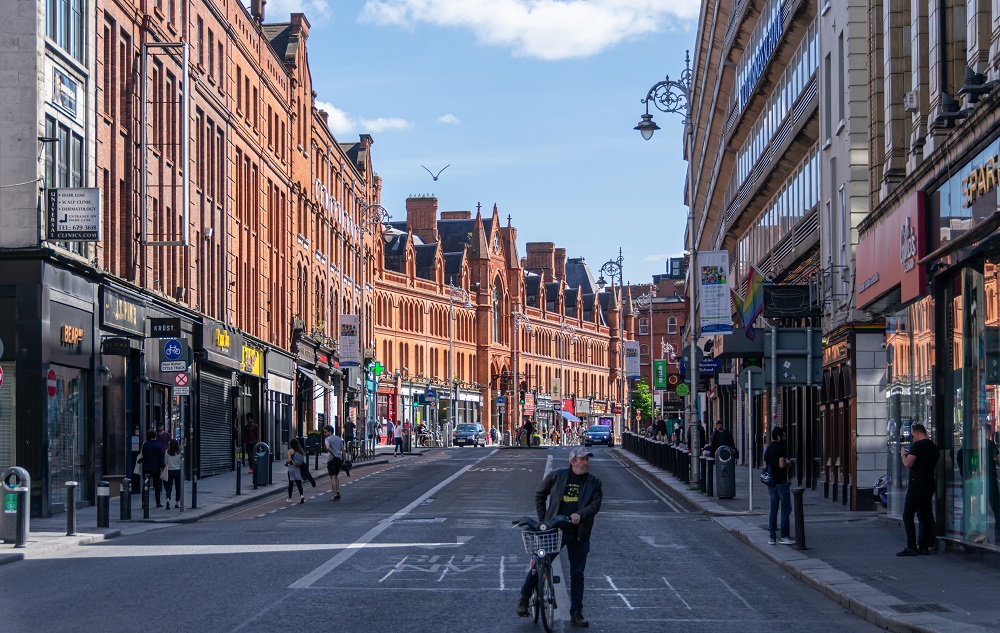
DJs blasted music, dancers took to the pavement and about 200 Dubliners gathered on South William Street and Exchequer Street this week as campaigners rallied to “Save Izakaya” amid a legal row between long-established venue Yamamori Izakaya and the newly opened The Hoxton Dublin.
The protest followed confirmation that Trinity Hospitality Ltd, landlords of the newly-open Hoxton Hotel located on Exchequer Street in the redeveloped former Central Hotel building, filed proceedings last week seeking an injunction against its neighbour over ' excessive noise transfer'. Supporters of Yamamori argue the case represents a broader threat to Dublin’s already pressured nightlife and cultural sector.
Yamamori Izakaya, situated on South William Street, has operated for many years as part of the wider Yamamori group, which includes restaurants and event spaces that have been fixtures in the capital’s dining and late-night scene since the 1990s. The Izakaya in particular blends Japanese street food with DJ-led club nights and has become known as both a restaurant and nightlife venue, drawing a loyal crowd of students, creatives and hospitality workers.
By contrast, The Hoxton Dublin opened in 2023 as part of the international Hoxton brand, owned by Ennismore, with the Dublin site operated by Trinity Hospitality. The hotel occupies the historic Central Hotel site, a building long associated with Dublin’s cultural life, including the former Library Bar — once a noted haunt for writers and musicians.
In a statement, the hotel said there had been “numerous” complaints from guests regarding noise and that it has been forced to close “approximately one quarter” of its rooms as a result. It stressed that proceedings were “not seeking to close” Yamamori Izakaya but were instead aimed at “enabling a collaborative solution”. The hotel added that it “wholeheartedly supports the cause of protecting cultural institutions” in the city.
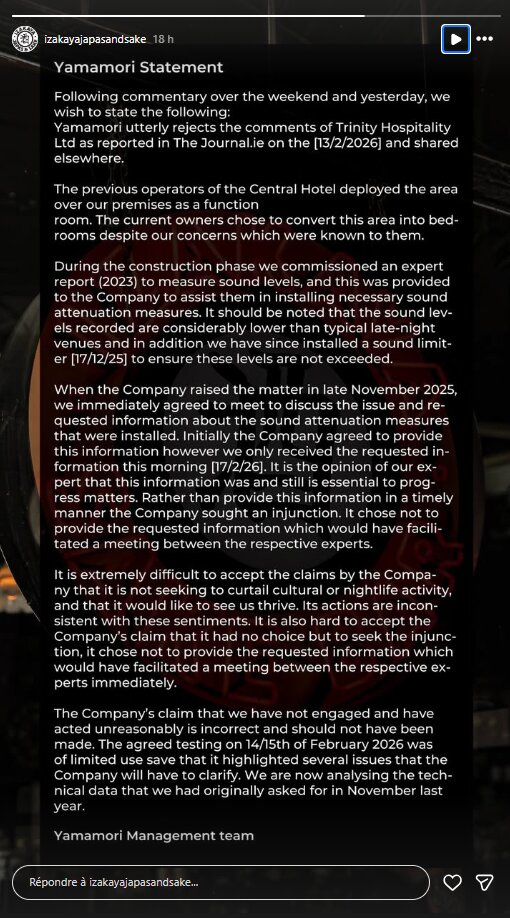
Yamamori Izakaya Statement via Instagram, 17.02.26
However, Yamamori management pushed back strongly in a lengthy Instagram post, writing: “It is extremely difficult to accept the claims made by the company that it is not seeking to curtail cultural or nightlife activity, and that it would like to see us thrive.” They continued: “It is also hard to accept the company's claim that it had no choice but to seek the injunction.”
In a further statement, a spokesperson for Trinity Hospitality said: “The purpose of the filing last week has not changed; it was always focused on advancing a testing and resolution process.” They added: “We have now been able to commence the (acoustics) testing process, which we hope will enable us to work together on a collaborative solution to reduce excessive noise transfer from Yamamori Izakaya into the hotel.” The spokesperson also stated: “We respect people’s right to protest and wholeheartedly support the cause of protecting cultural institutions” and confirmed an offer to meet protest representatives to “keep the dialogue open”.
For many of those gathered at the protest, the dispute is about more than one venue. Dublin’s nightlife sector has faced sustained challenges in recent years, including rising rents, redevelopment pressures, licensing restrictions and the lingering financial impact of the pandemic. Several well-known clubs and late-night spaces have closed over the past decade, prompting repeated warnings from promoters and artists that the capital risks losing its cultural vibrancy.
Campaigners argue that venues operating legally for years should not be penalised when new residential or hotel developments move into established entertainment districts. The issue echoes similar “agent of change” debates seen in cities like London, where developers are required to soundproof new buildings near existing music venues rather than forcing venues to adapt or close.
Supporters of Yamamori say the venue predates the hotel redevelopment and forms part of the social fabric of the area, which has long been associated with bars, restaurants and late-night activity. Protesters described Izakaya as a rare hybrid space where food, music and community intersect — something they believe is increasingly under threat in a city centre dominated by corporate hospitality and short-term accommodation.
The case is expected to focus on acoustic testing and whether workable mitigation measures can be agreed. For now, both sides publicly insist they are open to dialogue. But the strong turnout on the streets signals the depth of feeling surrounding nightlife in Dublin — and the anxiety that another independent space could be curtailed.
Whether the dispute results in technical compromise or a protracted legal battle, it has already reignited a wider conversation about who Dublin city centre is for: hotel guests seeking quiet, or the late-night venues that have defined its character for decades.
Written by Louise Ducrocq
Louise is an expert content creator, and online author for Radio Nova. She's evolved in a few different fields, including mental health and travel, and is now excited to be part of the wonderful word of Radio.