European Commission President Ursula Von Der Leyen
The European Union is set to introduce major changes to how smartphones and tablets are designed, with new rules requiring user-replaceable batteries from 2027.
Under the EU’s battery regulation, devices such as mobile phones, tablets and cordless phones must be built so that their batteries can be removed and replaced safely by users, without damaging the device. The rules will come into effect on February 18, 2027, marking a significant shift away from the sealed designs that have dominated the market for more than a decade.
🇪🇺| Europe will require all mobile phones to be sold with user-replaceable and longer-lasting batteries starting 2027.
The regulation demands the availability of spare parts and manuals for 10 years to curb planned obsolescence.
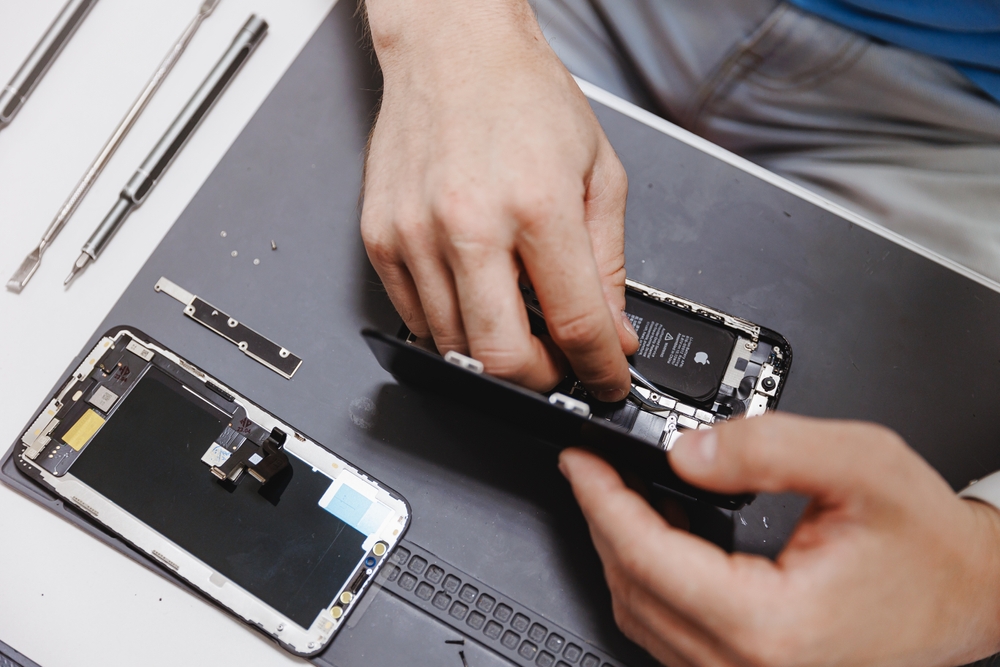
At the core of the regulation is a push for greater repairability and longer device lifespans. Manufacturers will need to ensure that batteries can be taken out using commercially available tools — or no tools at all — meaning consumers should no longer have to rely on authorised repair centres for a simple battery replacement.
The rules define an “end user” as an adult without specialised technical training, meaning the process must be accessible to the average consumer. However, this does not necessarily mean a full return to the old “pop-out” batteries seen in early mobile phones. Instead, devices may include simple tools or redesigned casings that allow easier access.
The legislation applies to a wide range of products, including smartphones, cordless phones and slate-style tablets, as well as some newer categories such as smart glasses. In cases where professional repair is required — such as for certain transport-related batteries — manufacturers must ensure that any necessary tools are available at a reasonable and non-discriminatory cost.
Beyond convenience, the regulation is also aimed at tackling electronic waste and improving how batteries are handled across their lifecycle. It includes provisions to ensure that removed batteries are properly collected, recycled and treated, rather than discarded.
The law first entered into force in August 2023, but is being rolled out in phases, with the battery removability requirement taking effect in 2027.
Due to global manufacturing practices, the impact is expected to extend beyond Europe, potentially influencing how devices are designed worldwide.
Some manufacturers have already begun adapting. Apple, for example, offers do-it-yourself repair kits for certain devices, while newer models are designed to maintain at least 80% battery capacity after 1,000 charge cycles — a benchmark referenced in the regulation.
The move is widely seen as part of a broader “right to repair” push, giving consumers more control over their devices while encouraging more sustainable product design.
Written by Louise Ducrocq
Louise is an expert content creator, and online author for Radio Nova. She's evolved in a few different fields, including mental health and travel, and is now excited to be part of the wonderful word of Radio.