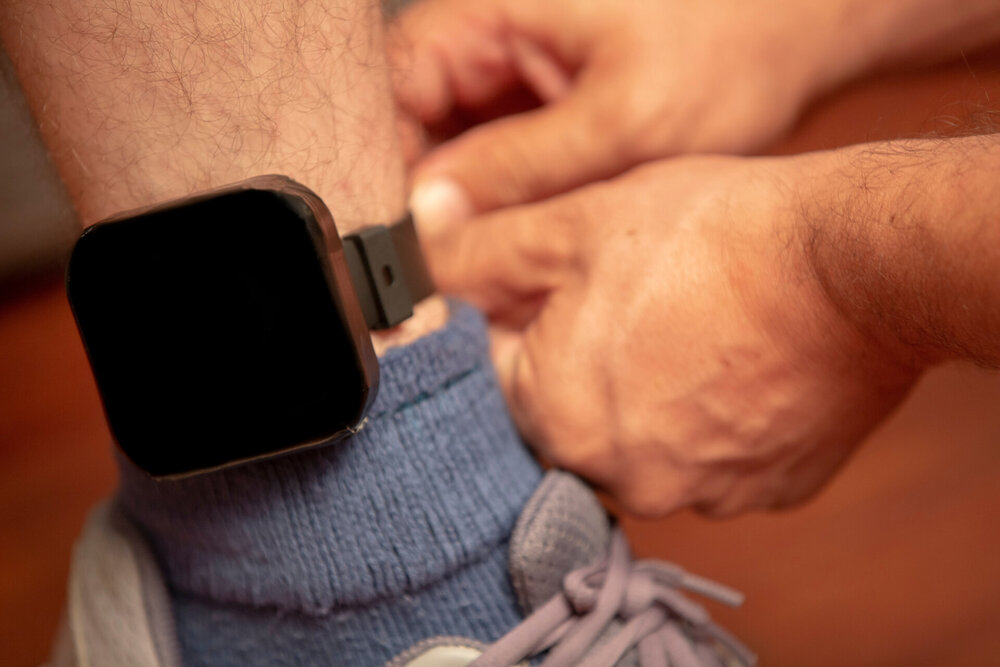

The Minister for Justice, Jim O’Callaghan, has launched a new electronic monitoring pilot scheme aimed at tracking prisoners on temporary release and certain people on bail who are not considered a danger to the public.
The 12-month programme will involve the use of up to 50 electronic ankle tags to monitor as many as 150 people over the course of the year.
The initiative is intended to improve the management of offenders in the community, provide alternatives to imprisonment where appropriate and help ease pressure on the country's overcrowded prison system.
There are currently around 700 more prisoners in the State's prisons than available spaces, with approximately 225 inmates sleeping on mattresses. The prison system is operating at 116% of its capacity.
Electronic monitoring involves individuals wearing an ankle tag that allows authorities to check whether they are complying with specific conditions while living in the community.
The devices use a combination of Radio Frequency (RF) and Global Positioning System (GPS) technology to monitor requirements such as curfews, approved residential addresses and restrictions on entering certain locations.
The system will also generate alerts if a potential breach of conditions or interference with a monitoring device is detected.
The service will be operated by Allied Universal Electronic Monitoring, a private company appointed following a public procurement process.
A dedicated electronic monitoring unit has also been established within the Department of Justice to oversee the scheme and coordinate its operation across the justice system. This will involve working with An Garda Síochána, the courts, the Probation Service and the Irish Prison Service.
The first phase will focus on identifying suitable prisoners for electronic monitoring while on temporary release. The scheme is expected to expand to certain bail cases early next year, with judges in a designated pilot area able to impose electronic tagging as an additional bail condition.
This could include monitoring compliance with curfews or preventing individuals from entering specified locations.
Minister O'Callaghan stressed that electronic monitoring would not replace prison sentences or custody where these are necessary. The nature and seriousness of an offence, alongside an individual's circumstances and risk profile, will remain central to decisions about suitability.
The project has received €2.1 million in funding, with a further €1.5 million earmarked for 2027.
The introduction of the scheme comes almost two decades after legislation allowing electronic tagging was first introduced. Former Justice Minister Dermot Ahern announced plans to use the technology to monitor sex offenders in 2009.
A previous pilot involving 20 low-risk prisoners was carried out in 2010 but was subsequently discontinued following concerns about its cost and effectiveness. Technical problems were also reported during the trial, including an incident in which a prisoner's ankle tag fell off while he was travelling on a bus and had to be returned to the prison.