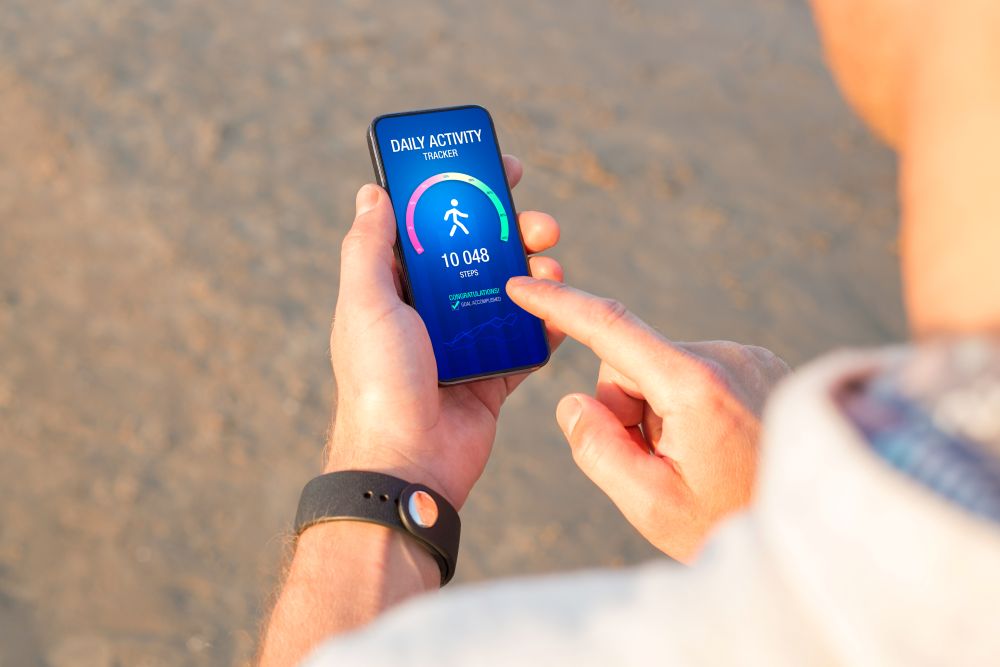

Fitness apps that track calories, step counts, and set unrealistic goals could be doing more harm than good, researchers warn.
While health apps can motivate people to run further, sleep better, and eat healthier, many fail to use “evidence or theory-based” methods to support real, lasting behaviour change — instead offering targets that are “difficult to achieve.”
That’s according to a new University College London (UCL) study, which found that some users of popular fitness apps are left feeling discouraged and disconnected from exercise altogether.
Corresponding author Paulina Bondaronek of UCL explained:
“Fitness apps remain some of the most profitable and widely downloaded health tools globally. While they can benefit health, there’s been far less attention to their potential downsides.”
She added:
“When health is reduced to calorie counts and step goals, it can leave people feeling demotivated, ashamed, and disconnected from what truly drives lasting wellbeing.”
Published in the British Journal of Health Psychology, the study examined the negative behavioural and psychological effects of commercial fitness apps by analysing 58,881 posts on social media platform X. The research focused on the five most profitable fitness apps as of March 2022 — MyFitnessPal: Calorie Counter, Strava, Weight Watchers, Workouts by Muscle Booster, and Fitness Coach & Diet: FitCoach.
An analysis revealed several negative themes, including:
The difficulty of accurately tracking diet and exercise.
Frustration with oversimplified algorithms.
Emotional responses to notifications and reminders from the apps.
Some users described feeling overwhelmed, ashamed, or demotivated — emotions that often led them to quit both the apps and their healthy habits.
One user wrote:
“I just got a notification from MyFitnessPal reminding me to log my dinner for today but I don't want to because I'm ashamed I just ate Dominos.”
Another posted:
“How disappointing it is when you smash gym and MyFitnessPal for a day and there’s no difference ... back to eating Lotus Biscoff spread out of the jar.”
Researchers concluded that there’s an urgent need for apps that focus on overall wellbeing rather than purely quantitative goals.
Dr Darren Player, lecturer in musculoskeletal bioengineering at UCL and a personal trainer, noted that calorie and step counts “are not suitable measures of overall health.” However, he emphasized that fitness apps aren’t inherently bad:
“The psychological aspects are dependent on personality. Some people want accountability, motivation, and gratification from interacting with peers on apps like these. Other people would find this type of interaction demotivating.”
Celebrity trainer Matt Roberts agreed that the key lies in mindset:
“For some, the competitive side with peers can be discouraging, especially early on, but that shouldn’t detract from the fact that most users gain real and lasting benefits from seeing their progress and learning how their daily habits affect their health.”