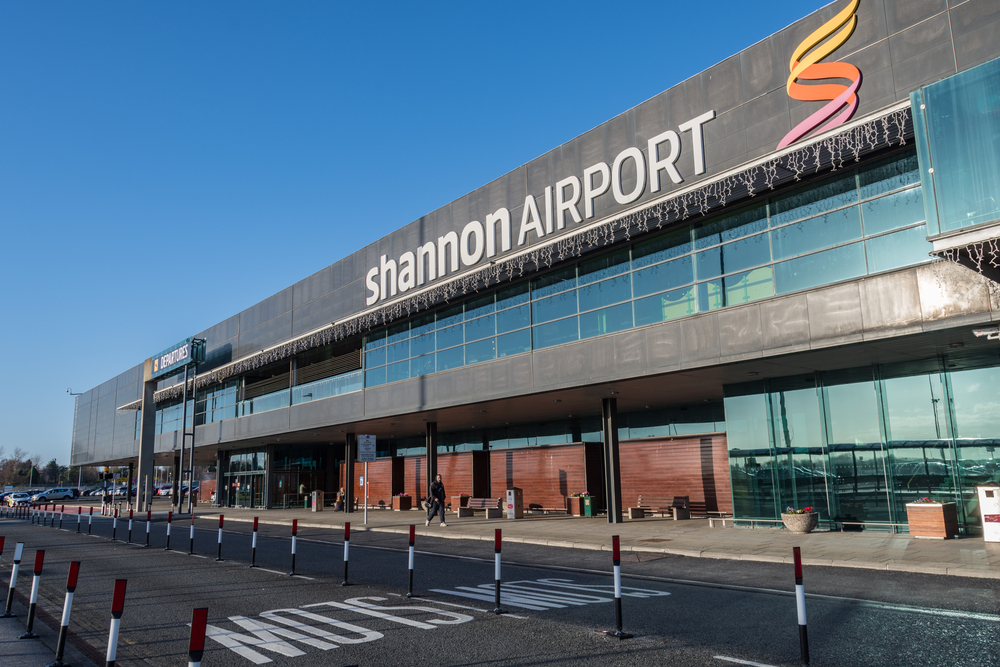

The number of US troops passing through Shannon Airport surged by 80 per cent in the early months of the year, coinciding with the outbreak of conflict involving Iran, according to newly reported figures.
Data shows that 2,012 troops travelled through the airport in January, rising by nearly 600 in February. However, the most significant jump came in March—immediately after the conflict began—when 3,604 troops were recorded transiting through the Midwest hub.
The figures, first reported by The Irish Times, have reignited debate around Ireland’s neutrality and the long-standing use of Shannon as a stopover point for US military operations.
While the Government has consistently denied facilitating US military strikes by allowing aircraft to pass through Irish airspace, the scale and timing of the increase has drawn renewed scrutiny from campaigners and political figures.
The latest data adds to an already complex picture surrounding Ireland’s role in global military logistics. Over the past two decades, millions of US troops have passed through Shannon Airport, which has developed into a key transit point—particularly during conflicts in the Middle East, including wars in Iraq and Afghanistan.
More recent figures analysed by RTÉ News show that between 2022 and 2024, nearly 2,000 US military aircraft and US civil operators carrying declared munitions of war applied for permission to land in or fly over Ireland. These flights frequently travelled between key military hubs such as Germany, Poland, Bulgaria, and Kuwait.
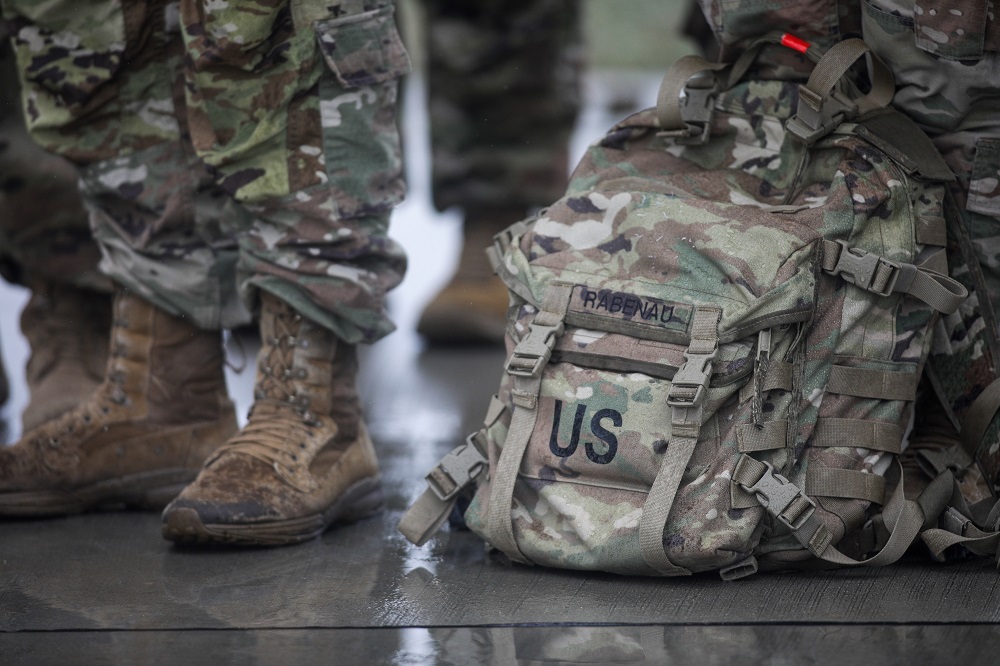
The presence of US military in Shannon Airport has been a growing concern for part of the country, worrying about Ireland's neutrality.
Despite the scale of activity, inspections remain rare. Only 0.1 per cent of applications from US civil aircraft were refused due to the nature of the munitions being carried, while no US military aircraft was prevented from landing in Ireland during that period.
Under Ireland’s Air Navigation Order 1952, foreign military aircraft require permission to land or overfly the State. However, a long-standing arrangement dating back to 1959 allows US military aircraft to pass through Irish airspace without prior notification, provided they are unarmed, carry no munitions, and are not engaged in active military operations.
Aircraft carrying weapons or military equipment must apply for special exemptions, although these are routinely granted. Many of these flights are classified as “technical stops”, involving refuelling and maintenance rather than operational deployment.
The Government maintains that Ireland is militarily neutral, meaning it does not participate in military alliances or combat operations, while still permitting overflights and landings under strict conditions.
However, critics argue that the volume and nature of US military traffic through Shannon raises legitimate questions about the boundaries of that neutrality. Advocacy groups have long called for stricter inspections and greater transparency, particularly amid concerns over the transport of weapons or involvement in controversial conflicts.
Separate reports have also added to the controversy.
In February, The Guardian claimed that a private jet chartered by US authorities stopped at Shannon twice while deporting Palestinians to Israel. The Department of Transport stated at the time that no permits were required as no passengers disembarked.
Shannon Airport’s strategic location on the western edge of Europe has made it a key refuelling point since it opened in 1945. Its relatively low congestion compared to major hubs such as London or Amsterdam, combined with extensive runway and ramp space, has made it particularly attractive for military and diplomatic transit.
Historically, the airport has hosted a wide range of global figures—from John F. Kennedy in 1963 to George W. Bush during the Iraq War—highlighting its long-standing geopolitical significance.
Despite ongoing debate, the Government continues to insist that the use of Shannon by US forces does not breach Ireland’s policy of neutrality, stressing that no military operations are launched from Irish soil and that all activity is subject to international law and domestic regulations.
Nonetheless, the sharp rise in troop numbers following the outbreak of conflict with Iran is likely to intensify scrutiny in the months ahead, as questions persist over Ireland’s role in the global military supply chain.