

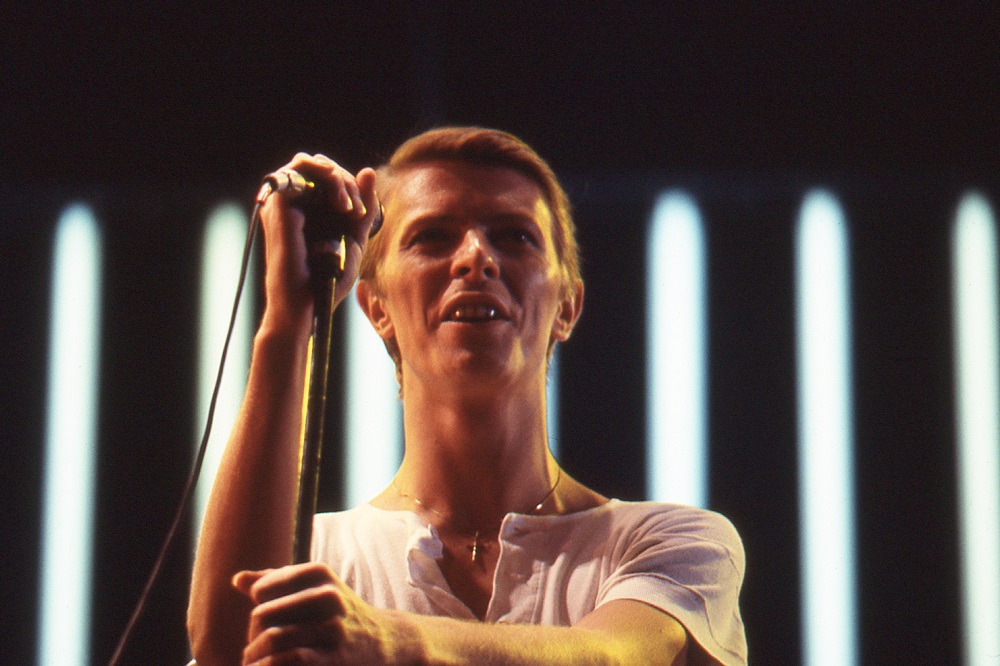
A decade has passed since the death of David Bowie, yet his presence in music, fashion and wider culture feels as vivid as ever. When the singer died on 10 January 2016, just two days after releasing his final album Blackstar, the timing alone cemented his reputation as an artist who carefully shaped every chapter of his life — and death — as part of a wider creative statement.
Born David Robert Jones in London in 1947, Bowie’s legacy rests first and foremost on reinvention. From Ziggy Stardust to the Thin White Duke, he refused to be confined to a single identity, genre or audience. In doing so, he challenged long-held ideas about masculinity, sexuality and celebrity, long before such conversations entered the mainstream. His openness and ambiguity offered permission for others to explore who they were, both onstage and off.
Musically, Bowie’s influence is vast. He moved seamlessly between glam rock, soul, electronic, pop and experimental sounds, often bringing underground movements into the mainstream. Albums such as Hunky Dory, The Rise and Fall of Ziggy Stardust and the Spiders from Mars, Low and Heroes reshaped what popular music could be, while his Berlin Trilogy helped introduce electronic and ambient textures that would later underpin modern pop and dance music. As Bowie himself once said, “I don’t know where I’m going from here, but I promise it won’t be boring.”
Beyond his own records, Bowie played a crucial role as a cultural catalyst. He championed emerging artists, from Lou Reed and Iggy Pop to later figures such as Arcade Fire and Lorde, often lending his credibility to voices operating outside the mainstream. His willingness to take risks — commercially and artistically — set a template for generations of musicians who followed.
Bowie’s final years added another layer to his legacy. Blackstar, released on his 69th birthday, was widely understood as a deliberate farewell, filled with coded references to mortality and transformation. “Look up here, I’m in heaven,” he sang, leaving behind a work that reframed death as one last act of creativity rather than an ending.
David Bowie's Bandmates Pay Tribute On 10th Anniversary Of Singer's Death
Bandmates of the late David Bowie paid tribute on the tenth anniversary of his death.
Bowie's death which happened in January 2016 following an 18 month battle with cancer, came as a shock as his health battles had not been publicly disclosed. Just days before his death, Bowie had released his final album, 'Blackstar'.
A number of household names paid tribute to Bowie, including The Libertines, The Horrors, Anna Calvi, The Molotovs, who all performed covers of his tracks.
Elsewhere, two of the late singer's bandmates Gail Ann Dorsey and Mike Garson also shared touching tributes to Bowie.
Dorsey, bassist and vocalist, regularly toured with Bowie from 1995 to 2004. She also sang Freddie Mercury's section of 'Under Pressure' during live performances of the hit track. She also provided vocals and bass for albums including ‘Earthling’, 2002’s ‘Heathen’, 2003’s ‘Reality’ and 2013’s ‘The Next Day’.
“So many around the world are thinking of him, and sharing their special memories at this time. With all of that energy abound, I have no doubt his Spirit is feeling our overwhelming love and appreciation,” Dorsey wrote.
“Looking back, it’s sometimes hard for me to believe that I had the incredible fortune of being a part of his life and a contributor to his musical legacy. There are constant reminders of that magical period of my life and career that will live on forever in music history; sometimes they bring great joy, and other times a deep sadness for a time and a man long gone,” she added.
“I have so much to be grateful for, for having had David as a mentor, a kind and loving supporter of my own creative dreams and endeavours, and a friend. I will never hesitate nor tire of singing his praises".
See this post in full here.
Elsewhere, keyboardist Mike Garson paid tribute to Bowie by sharing a post remembering the late musician, saying that even a decade on from his passing, his legacy is "never really absent".
“David lived in curiosity and courage. I still feel him when I sit at the piano. His spirit lives on in the music, challenging us to listen harder, think deeper, and never settle for the obvious,” he wrote. “What we shared went beyond notes and performances. I’m grateful every day for the time, his trust, and the music".
Mike Garson was the longest serving member of Bowie's live band, appearing with him on stage more often than any other musician.
He went on tour as part of Bowie's tour for thirty years, including his first and last US Tour, as well as playing on 'Aladdin Sane' and 'Outside'.
See his post in full here.
Last week, David Bowie's widow, Iman shared her new 'Blackstar' tattoo in tribute to Bowie. Check this out and Nova's report here.
David Bowie Childhood Home To Open For Visitors
The childhood home of David Bowie is set to become a public heritage site after a meticulous restoration that will return the property to how it looked in the early 1960s, offering fans the chance to walk through the very space where one of music’s most influential icons first found his voice.
The modest terraced house at 4 Plaistow Grove in Bromley, South East London — where Bowie lived from ages eight to 20 — has been acquired by the Heritage of London Trust. The project, due for completion in late 2027, will restore the interior to its appearance during Bowie’s formative years, centred on his tiny approximately 9ft x 10ft bedroom, which he later described as his “entire world.”
It was in this suburban home, before global fame, that Bowie — born David Robert Jones — began writing his earliest songs and absorbed the books, records and creative impulses that would shape his astonishing career. The house is where he crafted early material and returned in the late 1960s as he wrote breakthrough tracks including Space Oddity.
The restoration is being led by curator Geoffrey Marsh, co-curator of the acclaimed David Bowie Is exhibition, which toured internationally and helped redefine Bowie’s legacy for new generations. Marsh is using never-before-seen archival material and personal insights from Bowie’s childhood friends to recreate the house as it was during his youth.
Marsh said the project will centre on the room where Bowie “evolved from an ordinary suburban schoolboy to the beginnings of an extraordinary international stardom.” “I spent so much time in my bedroom. It really was my entire world,” Bowie once said of the space.
The restoration has already secured £500,000 in funding from the Jones Day Foundation, with a public fundraising campaign launching this month to support the next phases. When complete, the house will not only be open for visitors to explore but will also offer creative and skills workshops for young people, continuing Bowie’s ethos of artistic experimentation and inspiration.