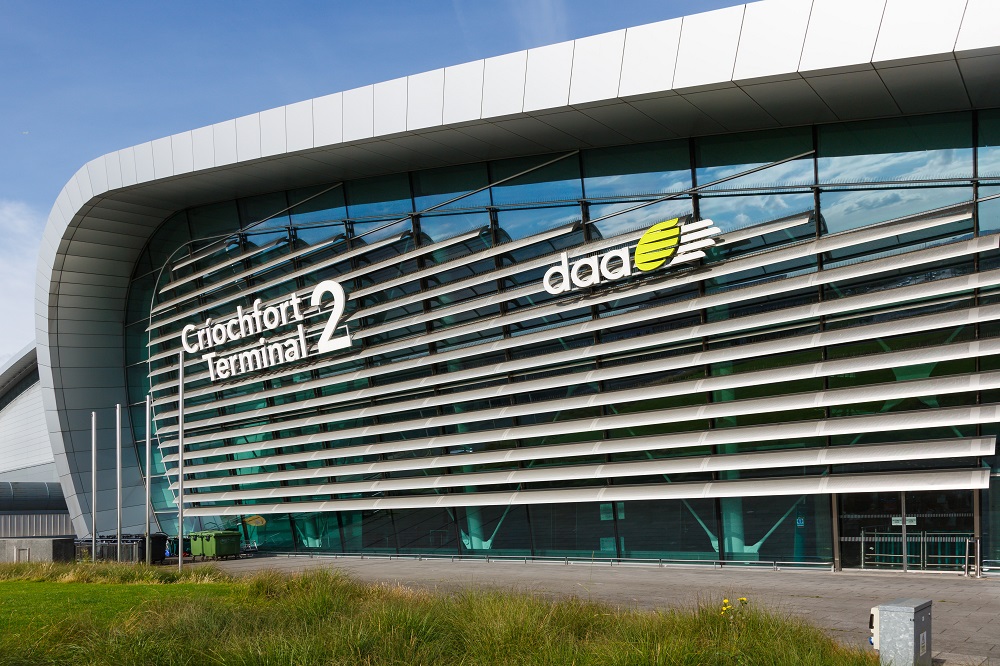

The DAA have hit back at a report from a climate NGO that Dublin Airport is on track to exceed their 2050 Carbon budget 16 years early.
This comes after the report, titled “Overshoot: How expansion plans break European airports’ carbon limits”, looked at the expansion plans and traffic forecasts for 20 major airports across 10 European countries.
In the report which was published by London based climate charity, Opportunity Green, it stated that Ireland could not claim climate leadership while aviation emissions grow and passenger numbers increase at Dublin Airport, the Irish Independent revealed.
They said that Dublin Airport faces one of the biggest rises in aviation emissions, as the Government works to remove its passenger cap.
It also found that all 20 airports analysed would exceed their carbon budget by 2050, even after more efficient aircraft and greater use of sustainable aviation fuel were considered.
“At precisely the moment Dublin Airport is facing running out of carbon budget, the Government is removing one of the only effective brakes on its expansion by lifting the passenger cap", Sorcha Tunney, senior manager at Opportunity Green Ireland said, per the Irish Independent.
In response, DAA have rejected the findings from the report, saying that the carbon budgets that the report is based on "do not exist".
The report also allocated Dublin Airport an estimated "fair and share" carbon allowance of approximately 27 million tonnes of C02, between 2025 and 2050. This was reportedly an estimate created by the report's authors by dividing a global carbon budget among aviation, individual countries and airports.
But the DAA have rejected claims that Dublin Airport could use up its carbon budget by 2034.
“The carbon budgets that the report talks about do not exist,” a spokesperson said. “While the report is dealing with hypotheticals, Dublin Airport is focused on the realities of meeting the actual public-sector climate targets that have been set out for us in the National Climate Action Plan, targets which we are on track to meet, as independently verified by the SEAI [Sustainable Energy Authority of Ireland]".
“Aviation emissions are managed under international agreements, EU ETS [Emissions Trading System] and Corsia [Carbon Offsetting and Reduction Scheme for International Aviation], and not set by airports".
The report stated that if passenger numbers at Dublin Airport were to exceed the 40 million mark by 2030, and 60 million by 2050, it is estimated that extra growth would add almost 14 million tonnes of C02.
Speaking about this, per The Irish Independent, Transport Minister Darragh O'Brien mentioned the report's calculations include international flights.
The report said: “Emissions from international aviation, including both CO₂ and non-CO₂, are outside the scope of the Climate Action Plan".
It added that the passenger cap of 32 million at Dublin Airport was not introduced as a climate reduction measure, rather it was imposed as a planning condition in 2007, addressing surface access and related infrastructure issues.
Such measures include more efficient aircraft, cleaner fuel, the EU ETS, ReFuelEU Aviation Regulation and international Corsia scheme would help the aviation sector to reduce its carbon impact.
Various airlines and business had called for the passenger cap to be removed as it became clearer that passenger numbers at the airport would surpass the legal capacity in recent years.
This comes after the Government passed legislation to remove the cap, which was imposed by Fingal County Council, as part of the building of the second terminal at Dublin Airport. This could give Minister O'Brien the autonomy to impose a cap in the future, which would appear unlikely, considering the importance of tourism and foreign direct investment to the Irish economy.
The Irish Times revealed that this comes days after the Irish Aviation Authority had granted as many as 28 more takeoffs and landings at Dublin Airport between March 28 and the end of October 2027, as part of slot allocation plans for the summer season.
The regulator added that they would not take the passenger cap into account at Dublin Airport, with the High Court already putting a stay on the enforced limit.