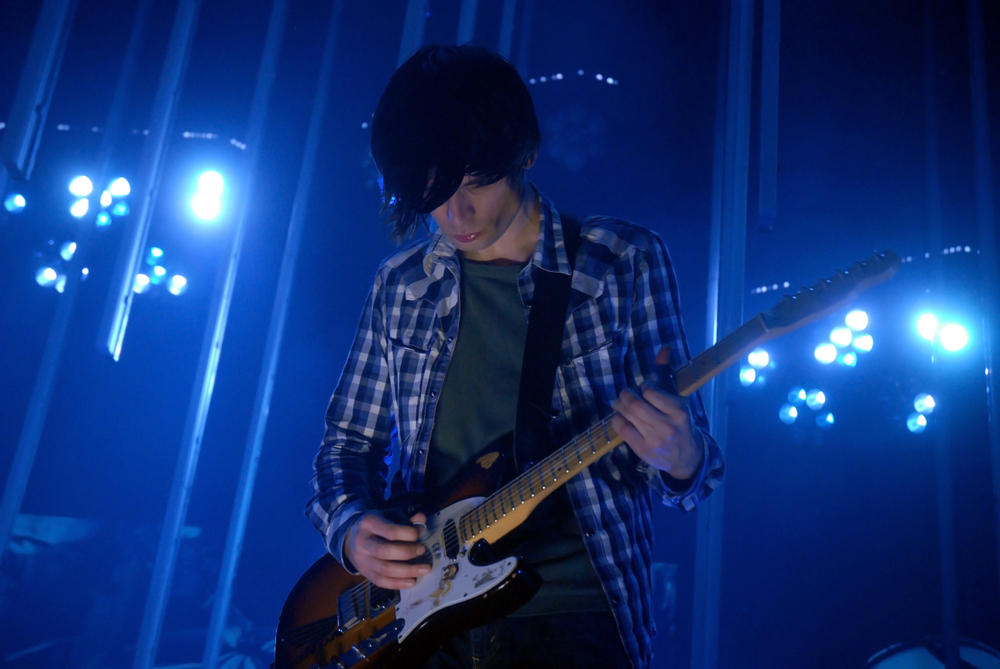

Jonny Greenwood has spent decades carefully curating the sonic architecture of Radiohead and an equally revered second life as a film composer. What he absolutely did not sign up for, apparently, was having his work repurposed as mood music for a much-derided documentary about Melania Trump. And he’s now making it very clear that he wants out.
The guitarist has demanded that a piece of his score from Paul Thomas Anderson’s 2017 film Phantom Thread be removed from Amazon’s new Melania Trump documentary, a project that has already been greeted with the kind of critical response usually reserved for condemned buildings.
Greenwood didn’t write anything for the film. He didn’t approve anything for the film. Yet a section of his Phantom Thread music ended up in it anyway, courtesy of what appears to be a licensing decision made somewhere far above his head. Neither Greenwood nor Anderson, who directed the original film, were consulted, and both are less than thrilled.
In a statement provided to Variety, the pair didn’t bother dressing up their irritation:
“It has come to our attention that a piece of music from Phantom Thread has been used in the Melania documentary. While Jonny Greenwood does not own the copyright in the score, Universal failed to consult Jonny on this third-party use which is a breach of his composer agreement. As a result Jonny and Paul Thomas Anderson have asked for it to be removed from the documentary.”
That’s about as close to a polite version of “absolutely not” as the film industry gets.
Greenwood has written music for 12 films, building a reputation as one of the most distinctive composers working today. Tense, intricate, often unsettling scores that elevate whatever they accompany. The idea that those sounds are now underscoring what many critics have described as a glossy piece of political image management has clearly not gone down well.
And it’s not as if the film itself has been welcomed with open arms. Far from it. Reviews have been savage to the point of almost sounding impressed by their own disdain.
The New Yorker asked, with surgical cruelty, “How do you capture a subject whose feet are more expressive than her personality?” before concluding that the film eventually feels like “an OnlyFans account crossed with that meme of Kim Jong Un visiting factories.”
The Guardian’s Xan Brooks went even harder, handing out a zero-star review and declaring: “It’s one of those rare, unicorn films that doesn’t have a single redeeming quality.” He also revealed that at his UK screening, he was the only paying customer in the room, a detail so bleak it could pass for conceptual art.
Meanwhile, The Daily Beast opted for blunt-force trauma with the headline: “Melania Is an Unbelievable Abomination of Filmmaking.”
And yet, in the way modern culture often operates like a malfunctioning vending machine, the film has still managed to make money. Variety reports that after two weekends it has taken $13.35 million domestically, a figure that would be respectable for a documentary even without the persistent rumours that not all of those ticket sales were made by actual humans with pulses.
So here we are: a critically mauled film, a composer who wants no part of it, and a studio caught in the awkward space between contracts and credibility. Greenwood’s stance is refreshingly simple, his music was never meant for this, and he doesn’t want it there.
Whether Amazon and Universal agree to hit delete is another story. But for now, one of modern music’s most meticulous creators has drawn a line in the sand, and it reads, in very large letters: not in my name.