

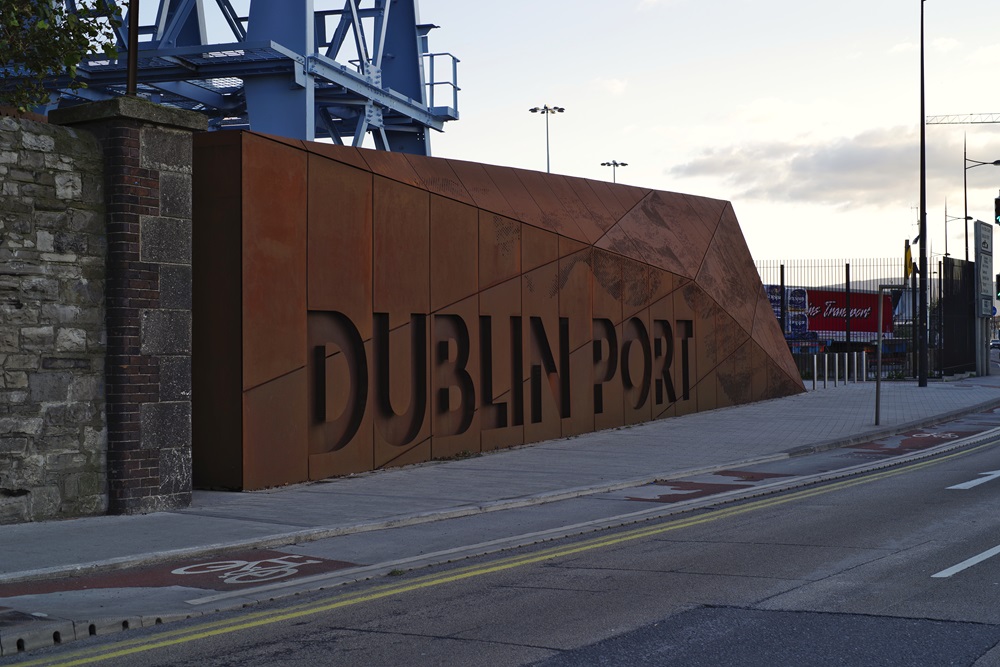
Part of Dublin’s Great South Wall has closed to the public for several weeks as Dublin Port undertakes urgent repair works following damage caused by Storm Bram.
Dublin Port says the historic sea wall, which is vital for protecting ships entering and leaving the harbour, is facing growing strain due to increasingly severe weather. Constructed between 1720 and 1795 along the Poolbeg Peninsula, the wall was originally built to shield the shipping channel. More than two centuries later, it remains a critical piece of marine infrastructure, safeguarding the movement of goods worth €165bn through the port each year.
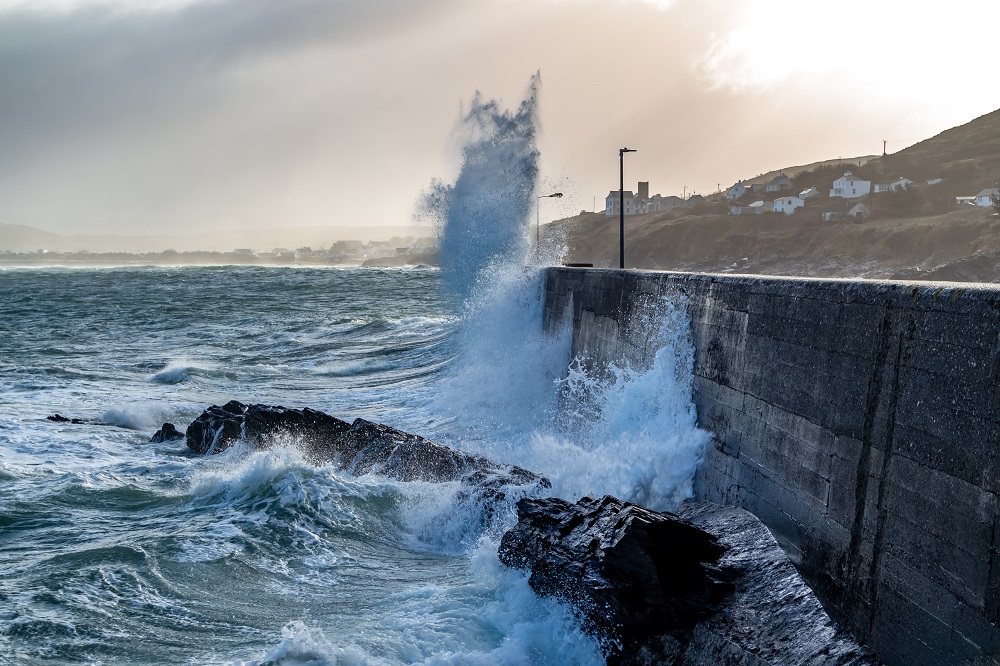
However, the structure was badly affected by Storm Bram, which struck Ireland on 8 December last year. Repairs are expected to cost €2.5m. According to Port Engineer Eamon McElroy speaking to RTÉ, the storm — ranked the fifth most severe ever recorded in the Irish Sea, shifted massive stones weighing between two and four tonnes from the base of the wall. Some were displaced, while others were completely washed away.
"The damage was caused to the rock armour that protects the Great South Wall and Poolbeg Lighthouse," he said. "Storm Bram moved so much rock within that one 12-hour window, compared to the previous ten years combined.
"That made us want to react very quickly so that we have enough resilience in the rock armour because nobody knows when the next Beast from the East is coming.
"We're going to bring local stone, which we've sourced in Arklow and is of the correct grade and correct strength, and we're going to plug up all the gaps."
Mr McElroy added that Dublin Port intends to seek planning permission for a more extensive upgrade of the rock protection system in response to the mounting pressure from extreme weather.
"We're going to bring in 15 tonnes of rocks from Norway and we'll build up the revetment again all around the Poolbeg Lighthouse and all the way down to the Half Moon Swimming Club," he said.
"That will give us more resilience to deal with these more severe storms that we're beginning to experience more frequently."
He noted that both the Great South Wall and Poolbeg Lighthouse are over 200 years old and were constructed on sand without traditional foundations.
"In 1995, we introduced the rock armour to give it protection, so it was designed for the storms of the mid-90s but the storms we are getting now, we are finding the wave energy is far higher than what we experienced back then.
"We actually monitor the rocks. We use laser scanning for the deck and the Poolbeg Lighthouse and other technology and we are able to build a 3D model.
"We started that back in 2015. Every year we repeat that 3D model and we overlap them on top of each other and that can tell us what rock armour has moved."
The essential repair works mean part of the five-kilometre wall will be partially closed for the next five weeks. Claire Percy, Dublin Port’s Head of External Affairs, said while the wall is a popular recreational spot, the restrictions are necessary.
"We can have 100,000 people walking the wall each year. These works are really important to protect the amenity right now and into the future," she said.
"The last 100 metres or so will be closed around the Poolbeg Lighthouse and we ask people to respect that cordon."
The Great South Wall works alongside the North Bull Wall to stop the River Liffey’s mouth from silting up and to maintain safe access for vessels. Acting as breakwaters, the two structures increase tidal flow, helping to prevent sediment build-up and ensuring adequate depth for shipping.
During periods of severe weather, the wall is fully closed to the public. It was shut once in 2023, four times in 2025, and has already faced multiple closures this year — highlighting the growing impact of powerful storms on the historic structure.