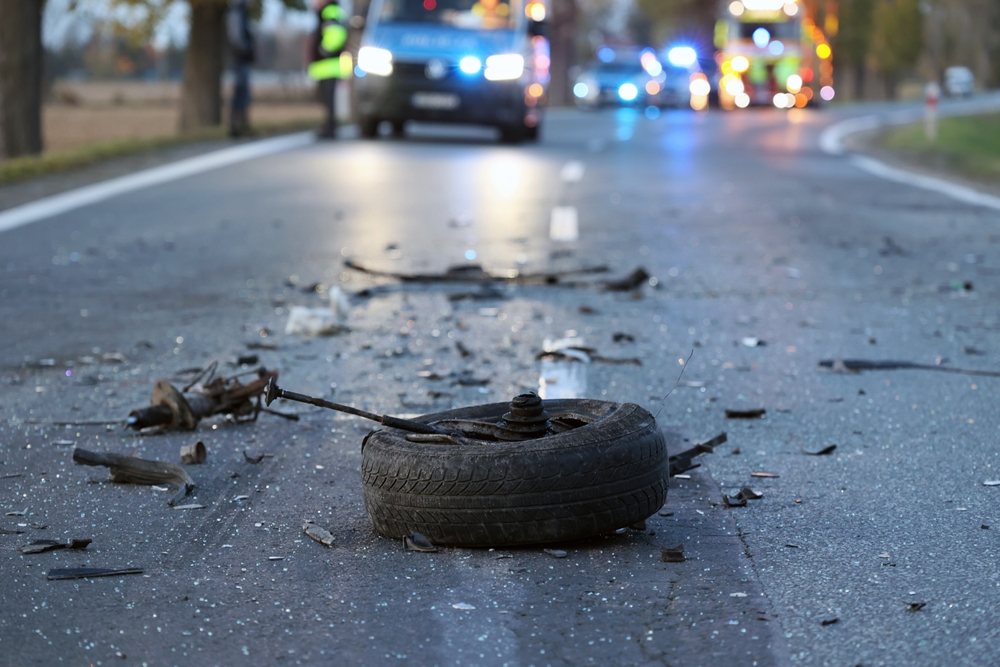

New figures from the Road Safety Authority (RSA) show that 85% of driver fatalities in Ireland occur on rural roads, highlighting the dangers motorists face away from motorways and built-up areas.
The figures come as Ireland continues to battle rising road deaths. While fatalities have fallen significantly over the past two decades – from 415 deaths in 2000 to 183 provisional fatalities in 2025 – recent years have seen an upward trend after reaching a low of 132 deaths in 2021, underlining the need for continued road safety awareness.
Despite carrying less traffic than urban routes, rural roads present a unique set of hazards that can catch drivers off guard. From slow-moving tractors and concealed junctions to wandering livestock and slippery road surfaces, motorists are being urged to remain vigilant, particularly during the busy summer months.
With this in mind, Julie-Ann Brannick, Customer Care Team Lead at Chill, has highlighted some of the most common risks drivers face on rural roads and how to avoid them.
Farm machinery often travels well below the speed limit, especially during silage and harvest season, which can tempt drivers into taking unnecessary risks.
Dangerous overtaking can result in a €160 fine and three penalty points. Drivers are advised only to overtake when there is a clear, unobstructed view ahead and enough space to complete the manoeuvre safely.
Motorists should also pay close attention to solid white lines, which indicate areas where visibility is restricted by hidden bends, dips or other hazards.
Overgrown hedges and vegetation can make it difficult to spot junctions, stop signs and approaching traffic on rural roads.
Drivers should slow down when approaching bends and junctions where visibility is limited and be prepared to stop if necessary, particularly during the summer when hedgerows are at their fullest.
Failing to stop at a stop sign or stop line can also lead to a €160 fine and three penalty points.
Another hazard unique to rural Ireland is livestock.
Whether animals have escaped from fields or are being moved by farmers, motorists should slow down immediately and leave plenty of space if they encounter cattle or sheep on the road.
Drivers are also advised to avoid using their horn where possible, as this may startle the animals and cause them to behave unpredictably.
Many rural roads were never designed for today's larger vehicles, meaning drivers can encounter long stretches with little or no room for two vehicles to pass comfortably.
Motorists should reduce speed, identify the nearest safe passing point and, if necessary, reverse to a wider section of road to allow oncoming traffic through.
Allowing extra time for journeys can also help reduce the temptation to take unnecessary risks.
Mud, gravel, silage residue and soil left behind by agricultural vehicles can significantly reduce tyre grip, particularly following rainfall.
Drivers are advised to slow down when approaching uneven or contaminated road surfaces and avoid sudden braking or sharp steering inputs.
Pedestrians, cyclists, horse riders and joggers are also common on rural roads, especially near villages, walking routes and recreational trails.
Drivers should anticipate their presence, reduce speed and leave at least one metre of space when overtaking where it is safe to do so.
Commenting on the findings, Julie-Ann Brannick, Customer Care Team Lead at Chill, said:
"As more people venture out onto our rural roads, it’s important to keep them as safe as possible for all involved, whether it’s drivers, cyclists or animals. The main thing to remember is to expect the unexpected. You should remain alert, slow down when visibility is reduced, and avoid taking risks.”