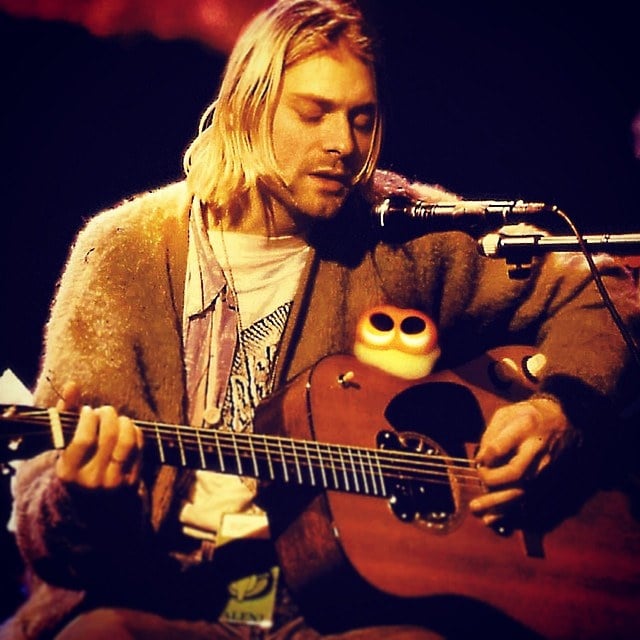

There are few records that loom over cultural memory the way MTV Unplugged in New York does for the Nirvana era, and few moments when a performance, still unheralded in its time, becomes the emotional hinge on which an entire fan-community swings. Released on 1 November 1994, barely six months after frontman Kurt Cobain’s death on 5 April 1994, the album arrived amid shock, sorrow, and the clang of unanswered questions.
The set itself, recorded on 18 November 1993 and broadcast first on 16 December of that year, captured a band already in flux: Cobain coping with health issues, including bronchitis on the preceding European tour; an overdose in Rome days after what would turn out to be their final live outing in Munich. The acoustic format felt, in retrospect, less a gimmick and more a breath-pause before the inevitable conclusion.
Journalist Will Hodge recalls: “It came out on the Thursday night right before we went out for Christmas break when I was in seventh grade… I pretty much just had this VHS of Nirvana’s Unplugged [in constant rotation] as well.” In those two weeks of enforced school-holiday suspension, the performance became intimate, almost domesticated, a way for fans to hang on, rewinding and replaying amid uncertainty.
What makes the record resonate isn’t just that it exists, but that it exists under the weight of context. Hodge notes the contrast between the Unplugged show and the earlier, electric concert broadcast on New Year’s Eve, from Seattle. “These two Nirvana performances were so different and both so unique… the Live and Loud show was different,” he says. “Plus the Nirvana Unplugged didn’t have that aura yet of being one of the ‘big final statements from Nirvana’.” In other words: nobody yet knew how final this acoustic snapshot would become.
In reviewing the evolution of Nirvana’s live identity, from 31 October 1991’s Live at the Paramount to the two 1993 performances, we see a band simultaneously sharpening their craft and preserving raw edge. The Unplugged set plays like a bridge: precision and fragility locked in tension. Cobain’s health, his state of mind, the rehearsal difficulties, all of it layered beneath the performance. Hodge observes: “When you see … the dynamic between Dave [Grohl] and Kurt … Kurt was very much feeling like the performance wasn’t going that great … even kind of in the middle of it.”
Yet, even in the shadow of those problems, the worn throat, the weight of touring, the sense of being stretched too thin, the Unplugged performance offers something more than a document of decline. It offers communion. For fans navigating the shock of Cobain’s passing, it became a conduit for grief and, paradoxically, for solace. Because in the stillness of acoustic guitars, the cello of Lori Goldston, the stripped-down versions of songs, there was a space granted for mourning. “In the wake of Cobain’s death … it also offered a certain comfort to fans who were grieving the unexpected loss,” the original article notes.
The Unplugged album, then, occupies a rare place: not simply as a gate-fold live record in a band’s discography, but as a cultural artefact of transition. It stands for the moment when fandom confronted mortality, and found in a shimmering, hushed set something they could hold onto. Nearly 30 years on, it remains both a performance and a memorial, a bittersweet testament to what was, what could have been, and what will never be replicated.