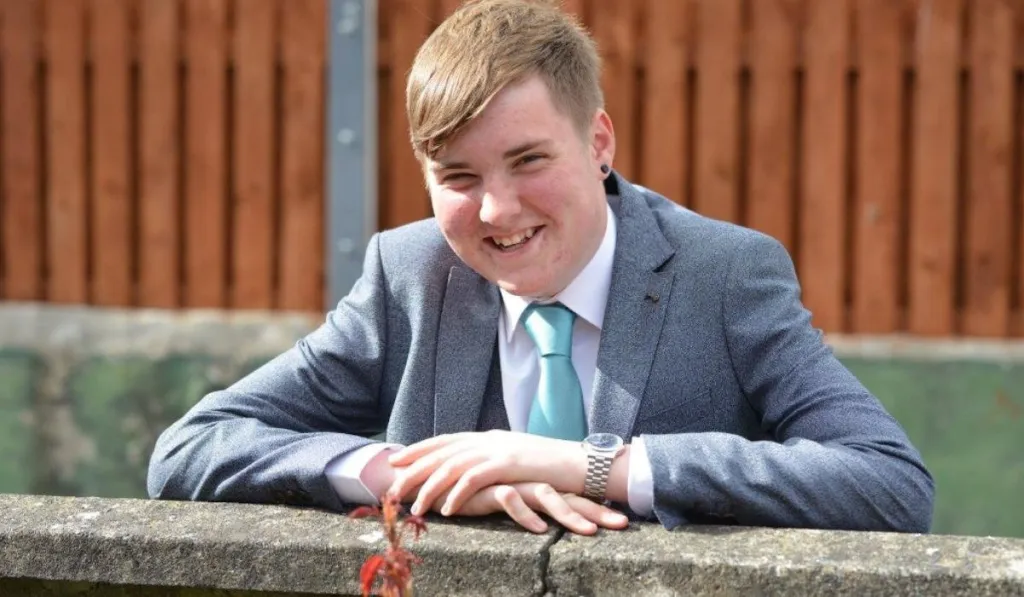
Pictured: Cameron Reilly’s body was discovered in a field in Dunleer in May 2018.
A man who spent more than three years serving a life sentence for the murder of teenager Cameron Reilly has had his conviction quashed after the Court of Appeal found that the trial judge’s instructions to the jury lacked balance.
Mr Justice John Edwards said today that during the trial of Aaron Connolly, “such were the stridency and emphasis” of comments made by Mr Justice Tony Hunt, “there is a real possibility the jury could have perceived that he was personally convinced of the guilt of the accused and that implicitly he was pressing them to deliver a guilty verdict”.
The trial heard that Mr Connolly, now 26, initially denied that anything sexual had taken place between him and Mr Reilly on the night of the killing and told gardaí he was “straight”.
However, on the seventh day of the trial, Mr Connolly admitted through his lawyers that he had performed oral sex on Cameron Reilly on the night he died. He maintained that Mr Reilly was still alive and standing when he left.
Friends of Mr Reilly told the court that the teenager had recently confided in them that he was bisexual.
Mr Connolly, of Willistown, Drumcar, had pleaded not guilty to the murder of 18-year-old Cameron Reilly at Shamrock Hill, Dunleer, Co Louth, on 26 May 2018. He was convicted by a unanimous jury verdict in December 2022.
Mr Reilly, a student at DKIT, had been among a group of around 15 young people gathered in a field on the outskirts of the town on the night of 25 May. Alcohol and cannabis were consumed by some members of the group, although Mr Reilly’s best friend said he did not take drugs.
Shortly after midnight, the group went to a local takeaway for food. Mr Reilly’s body was discovered in the field the following morning by a man walking his dog.
Chief State Pathologist Dr Linda Mulligan told the trial that the cause of death was asphyxia caused by external pressure to the neck, with no other contributing factors.
In his first statement to gardaí, Mr Connolly said he and Mr Reilly had gone in separate directions at the end of the night and that after they parted, he “never looked back” to see where Cameron went.
Opening the appeal last June, Michael Bowman SC, for Connolly, argued that Mr Justice Hunt had reduced the defence case to the suggestion of a “peeping Tom” who had emerged from the bushes “aroused or angry” and killed Mr Reilly.
“That is nothing if not denigrating of the defence case,” he said.
He asked the three-judge court to consider whether “a line had been crossed” that amounted to “a deconstruction of the defence closing and thereby of its defence”.
Mr Bowman also challenged how admissions made by Connolly through his counsel during the trial were addressed in the judge’s charge to the jury.
The admissions were made under Section 22 of the Criminal Justice Act 1984, which allows an accused person to accept certain parts of the prosecution case, removing the need for witnesses to be called to prove those elements.
Delivering the Court of Appeal judgment today, Mr Justice Edwards said the court agreed with submissions from Connolly’s legal team that Mr Justice Hunt’s charge lacked balance and that parts of it “may have been perceived by jury members as advocacy”.
The conviction was quashed, and the Director of Public Prosecutions will now decide whether to seek a retrial.