
Residents in a Dublin housing estate are being told to remove privately installed electric vehicle chargers costing up to €2,000, after the developer said they were put in place without the necessary approvals.
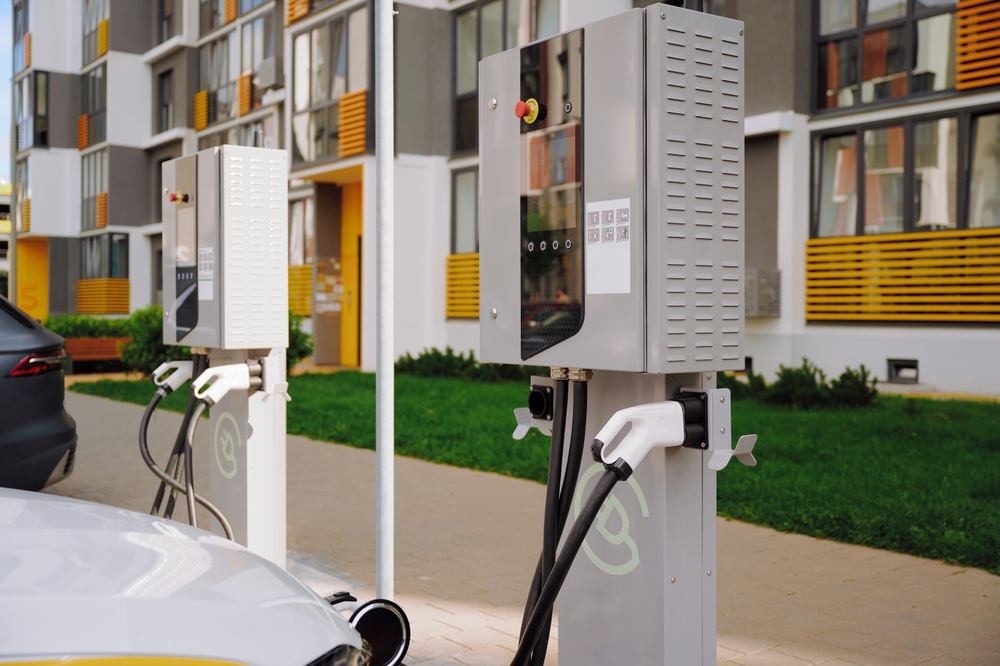
Homeowners in the Shackleton development in Adamstown have received letters from Cairn Homes stating that a number of EV charging points — installed in shared or public areas — must now be disconnected.
The issue has emerged as the estate moves towards being formally taken in charge by South Dublin County Council, a process that transfers responsibility for roads and public spaces from the developer to the local authority.
Among those affected is resident Bhawna Rana, who installed a charger in 2024 after moving into the estate in 2020. Like many in the area, her home does not have a driveway, meaning she relies on on-street parking.
Her charger is connected via cabling that runs from her home, underneath a cycle track and footpath, to a small charging unit located roadside. She said the installations were organised collectively by residents and carried out by qualified professionals.
“A lot of people have the chargers around,” she said, estimating there are more than 20 similar units installed locally, though it remains unclear how many households have been instructed to remove them.
The directive has left some residents facing difficult financial decisions. Ms Rana said the cost of installing her charger was around €2,000, while her electric vehicle — a Tesla — cost approximately €45,000 and is still being paid off.
“It’s very stressful, to be honest, and not just the financial impact, but also the fact that we have to stress about this unnecessarily,” she said.

She added that without reliable home charging, owning an EV becomes impractical. “You can’t really rely on them without having a private charger. So, you’re talking about having to buy a new car. I don’t want to think about the cost, to be honest right now, because it’s impractical.”
Defending the installations, she said they were completed to appropriate standards. “Absolutely not. It’s done to the required standard. We have used the right ducting. It’s at the right depth.”
In a statement, Cairn Homes said that “certain EV chargers have been identified as being installed within public areas without the required approvals” and confirmed it is engaging with residents on the matter. The developer said it has issued “clear guidance” on the steps required, in order to avoid delays in the estate being taken in charge by the council.
However, uncertainty remains over enforcement and what will happen if residents do not comply.
Ms Rana also raised concerns about a lack of clarity over responsibility, noting that her street has already been taken over by the council. “There needs to be some authority who’s making sure that the infrastructure that we’re building today is fit for purpose, that we are aligning with the national strategy,” she said.
She questioned how Ireland’s push towards electric vehicles can succeed without adequate infrastructure. “I know there’s a push from the Government to have more EVs on the road. But how is that going to work if you’re not going to have appropriate infrastructure for charging?”
South Dublin County Council said it supports the transition to more sustainable transport but highlighted complications where chargers are installed outside the boundary of private homes. It said that where such infrastructure remains in footpaths or communal areas, it cannot take responsibility for the surrounding roads or services.
The council acknowledged that national policy is still evolving, particularly for households without driveways — a common issue in urban areas.
The Department of Transport said it is aware of these challenges and pointed to the proposed Private Wires Bill, which aims to provide a framework for residents to run charging cables from their homes to on-street parking spaces. A broader national framework is expected later this year, with pilot schemes already underway.
The dispute comes as the Government continues to push for increased EV adoption, with a target of 30% of all cars on Irish roads to be electric by 2030. However, experts have repeatedly warned that achieving this will depend heavily on expanding accessible and reliable charging infrastructure — particularly for households without off-street parking.