

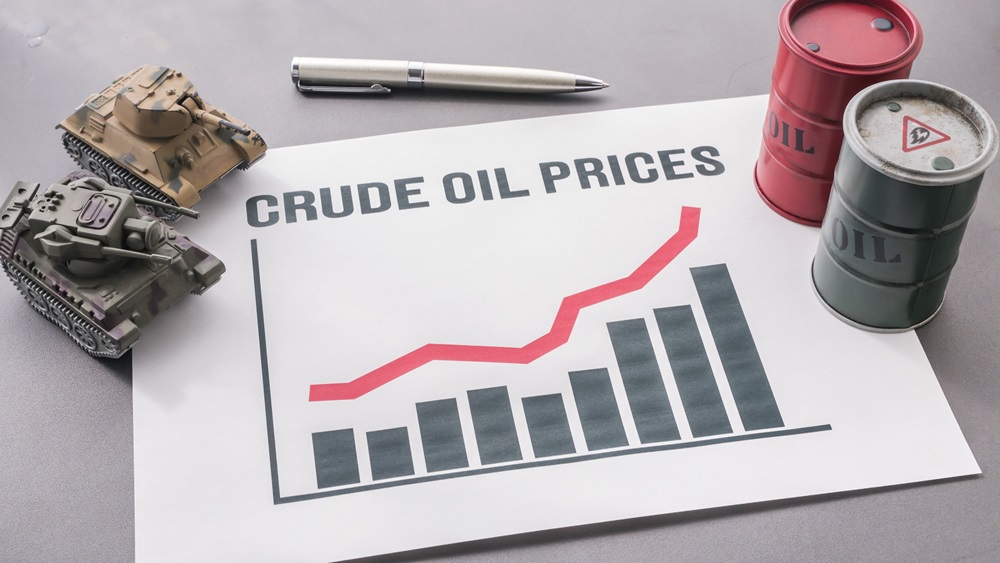
Oil and fuel prices have surged sharply amid escalating conflict in the Middle East, pushing the cost of home heating oil and petrol significantly higher while raising concerns about inflation and global economic growth.
Home heating oil prices have climbed to around €880 for a 500-litre fill, compared with less than €500 before the conflict began last weekend.
At the same time, petrol prices have risen to about €1.90 per litre at some service stations, while diesel has reached as much as €2.08 per litre at certain forecourts.
The surge comes as global stock markets experience volatility after energy prices spiked due to supply disruptions across the Middle East. Oil prices briefly jumped above $100 a barrel for the first time since Russia’s invasion of Ukraine in 2022. The increase followed Iranian retaliation to US-Israeli strikes, with attacks targeting locations in crude-producing Gulf countries.
After surging by roughly 30% during Asian trading, the two main international oil benchmarks, Brent and West Texas Intermediate (WTI), later gave up some of those gains and slipped back below the $100 per barrel mark. Even so, the earlier spike was steeper than the initial surge seen after Russia’s 2022 invasion of Ukraine, when oil reached $130.50 per barrel.
Tensions intensified after Iran marked the appointment of Ayatollah Mojtaba Khamenei as its new supreme leader, replacing his father, by launching further missile attacks against Israel and Gulf states. The attacks have increased fears about damage to energy infrastructure and the possibility of a prolonged regional conflict.
"The overnight panic in oil has eased for now as the price reverses its madcap gains above $100 but the underlying reasons for the shock move remain in place," said Chris Beauchamp, chief market analyst at online trading and investing platform IG.
"It is now open season on oil infrastructure across the region, which puts a near-term floor under the price well above the pre-war highs," he said.
Despite retreating slightly, Brent crude remains about 38% higher than it was just before the conflict began and is up 64% since the start of the year. WTI has risen 43% since the eve of the war and 67% since January.
Iran’s retaliatory strikes have severely disrupted maritime traffic through the Strait of Hormuz, a critical shipping route through which roughly one-fifth of the world’s crude oil and liquefied natural gas normally passes. The disruption has slowed tanker movements and heightened security concerns.
Asian stock markets fell sharply as oil prices spiked, although losses were later reduced in Europe and on Wall Street when crude prices retreated from their highs. Even the Nasdaq Composite managed to move higher during midday trading in New York.
Nevertheless, investors remain concerned that rising energy costs could push inflation higher while weakening economic growth.
"The surge higher for the price of oil is significantly increasing stagflation risks for the global economy and could trigger a deeper sell-off in global equity markets," said analyst Lee Hardman at Mitsubishi UFJ Financial Group.
Stagflation occurs when high inflation coincides with stagnant economic growth, forcing central banks to raise interest rates even as economies slow.
Expectations for monetary policy have already shifted. Investors now anticipate just one interest rate cut from the US Federal Reserve this year, compared with two cuts expected last week. Meanwhile, the European Central Bank is now predicted to raise interest rates sharply rather than keep them unchanged.
US Senate Democratic Leader Chuck Schumer has urged the release of US strategic petroleum reserves, while officials say the Group of Seven nations are also considering similar measures.
At the same time, supply disruptions are spreading across the region. Saudi Aramco has begun reducing output at two oilfields, while analysts believe OPEC producers such as the United Arab Emirates may soon have to curb production as storage capacity fills.
Iraqi oil production from its main southern fields has dropped by about 70%, leaving output at roughly 1.3 million barrels per day because exports through the Strait of Hormuz have been blocked. Storage facilities have already reached maximum capacity.
Kuwait Petroleum Corporation has also started cutting production and declared force majeure on shipments. Qatar, a major exporter of liquefied natural gas, has halted production following attacks on key infrastructure.
Additional disruptions have occurred elsewhere in the region. A fire broke out in the UAE’s Fujairah oil industry zone after debris from an attack fell nearby, although no injuries were reported. Bahrain’s BAPCO refinery has declared force majeure after suffering damage from an attack, and Saudi Arabia has already shut down its largest refinery.
These supply interruptions are adding further pressure to global energy markets. European Union countries have been trying to diversify their energy sources since Russia’s invasion of Ukraine, but many still depend on oil and liquefied natural gas from Gulf producers.
Analysts warn that the situation could worsen if tanker movements through the Strait of Hormuz do not resume soon.
"Unless oil flows through the Strait of Hormuz resumes soon and regional tensions ease, upward pressure on prices is likely to persist," said Vasu Menon, managing director for investment strategy at OCBC in Singapore.
Commodity analyst Satoru Yoshida from Rakuten Securities said the leadership change in Iran may also prolong the crisis.
"With the appointment of the late leader's son as Iran's new leader, US President Donald Trump's goal of regime change in Iran has become more difficult," he said.
"That view accelerated buying, as Iran is expected to continue its closure of the Strait of Hormuz and attacks on other oil-producing nations' facilities, as seen last week."
He added that oil prices could climb further, predicting WTI might rise to between $120 and $130 per barrel in the near future.