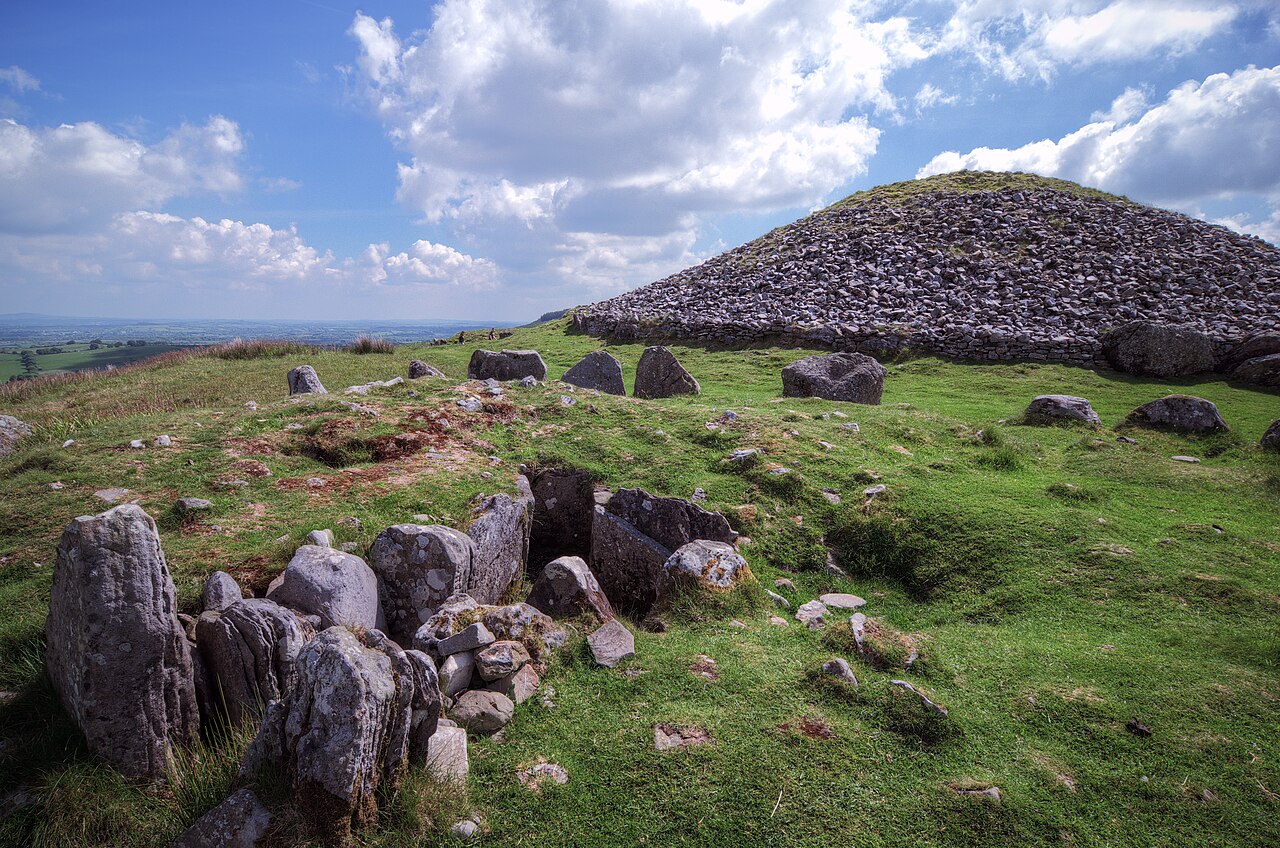

A Garda investigation is under way after serious vandalism at the prehistoric Loughcrew Megalithic Cemetery in Co Meath.
The Department of Housing, Local Government and Heritage has described the incident as a significant case of heritage crime, after stones inside one of the ancient passage tombs were damaged.
Some of the stones, which feature megalithic artwork, have been damaged by blunt force and graffiti.
The Department says the damage is serious and that the vandalism is an offence under the National Monuments Acts.
The site has now been inspected by the National Monuments Service – Archaeology and the Office of Public Works.
An investigation involving An Garda Síochána is continuing.
The Loughcrew Megalithic Cemetery is located near Oldcastle in Co Meath and is one of Ireland's major prehistoric passage tomb complexes.
The cemetery is also known as the Hills of the Witch and consists of a group of Neolithic passage tombs spread across four hills.
The tombs date back to around 3000 BC, meaning the site is around 5,000 years old.
The hills are the highest point in Co Meath, with the tombs sitting across the area's distinctive landscape.
The monuments contain a number of examples of megalithic art, including carved stones that form part of the ancient tombs.
The site is one of four major passage tomb cemeteries in Ireland.
The other three are Brú na Bóinne, also in Co Meath, and Carrowmore Megalithic Cemetery and Carrowkeel Cairns in Co Sligo.
Loughcrew is named after the nearby Loughcrew Estate and has become an important archaeological and heritage site.
The damage has raised concerns about the protection of Ireland's ancient monuments, particularly structures which have survived for thousands of years.
The Department of Housing, Local Government and Heritage is now working with the National Monuments Service and the OPW as the investigation continues.
Anyone with information about the vandalism is being asked to contact Gardaí.