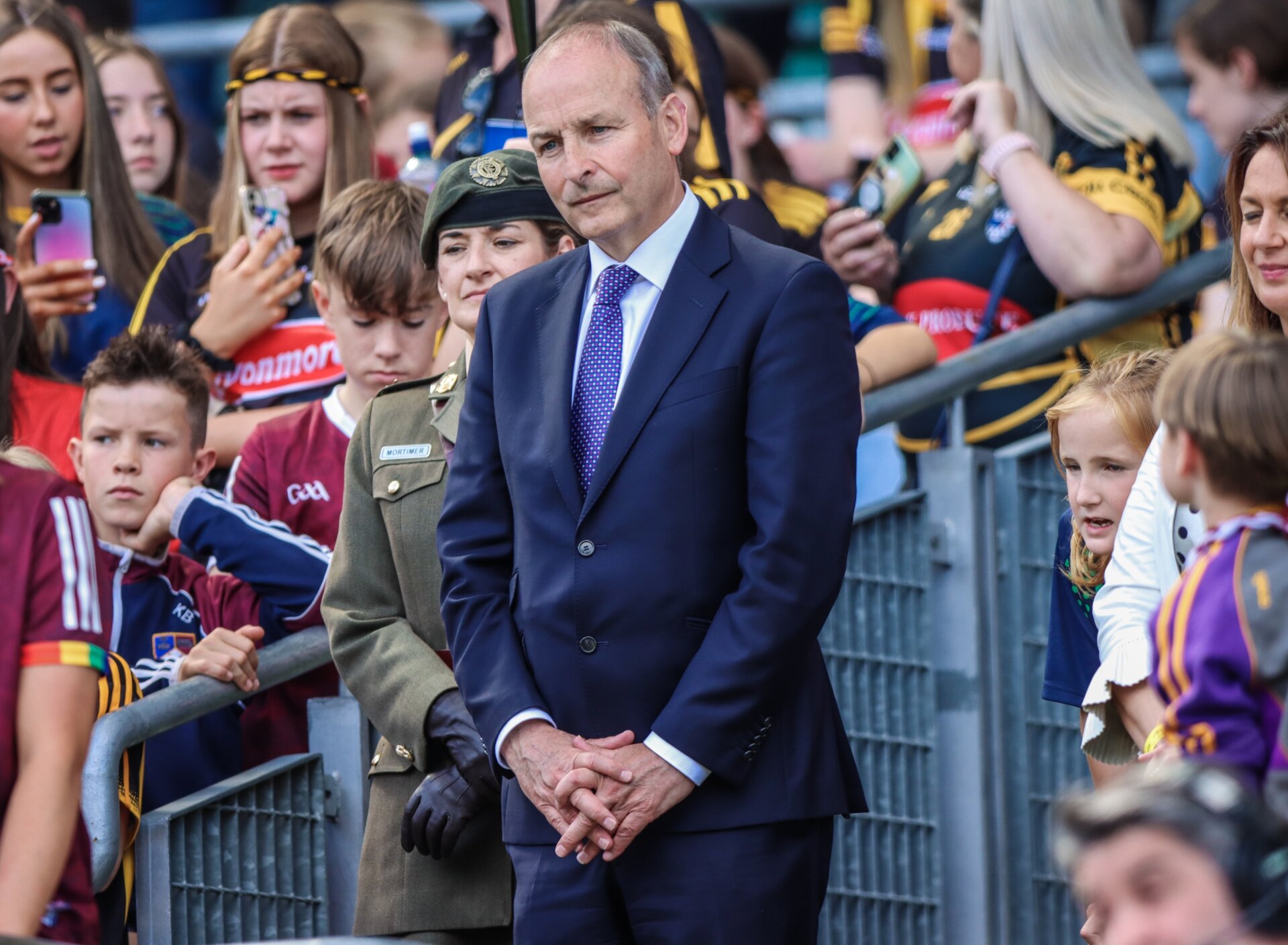

The Taoiseach, Micheál Martin, has drawn a clear line under speculation of an early referendum on Irish unity, saying there will be no border poll before 2030. Speaking from New York, he told the Irish Examiner that the issue of unity needs much deeper groundwork before such a constitutional step can be taken.
Sinn Féin has recently intensified pressure on the Government to prepare for a border poll within the coming five years, but Martin made his stance clear: it will not happen during his administration. He insisted that the public on both sides of the border must be more united before partition can be ended.
Looking back, he accused Sinn Féin of following polls rather than leading: “I’ve watched Sinn Féin over the last decade blow hot and cold on the border poll,” he said. “They kind of invented it after Brexit … and then, when assembly elections came along, they downgraded the border poll because they did their own opinion polls and focus groups, and they said it’s not travelling.” He went on to challenge them: “Where’s Sinn Féin’s blueprint? Why is Sinn Féin always saying somebody else has to write the blueprint?”
Under the Good Friday Agreement, the power to call a border poll lies with the UK Northern Ireland Secretary, who must be convinced there is evidence public sentiment has shifted in favour of constitutional change. However, successive UK governments have never publicly defined what metrics they would use.
Regarding the language around a “border poll,” Martin said he dislikes the term itself. He prefers a broader concept of national unity, referencing historic republican ideals: “I believe it makes logical sense that we would have unity in the country, and that we would unite the people of Ireland … but it’s in the Wolfe Tone framework of uniting ‘Protestant, Catholic, and dissenter.’” He also pointed out demographic changes in Northern Ireland as another factor that shapes future possibility.
The issue of Irish unity has crept into the presidential election campaign. Catherine Connolly, backed by Sinn Féin and other parties, has said she would not call for a border poll within the next decade. Heather Humphreys (Fine Gael) has stated she now supports Irish unity, citing her example as someone from a Protestant background. Jim Gavin (Fianna Fáil) said a border poll is a decision for the government of the day, and appealed for Sinn Féin to join in a shared approach.
Martin also stressed that change must be evolutionary. His Shared Island Unit will continue to fund projects that aim to bring together communities north and south. “My view is reconciliation of people and unity of people that will have ultimately different political manifestations. But I do see an evolutionary approach.”
In sum, the Taoiseach has set a firm timeline for constitutional change — not before 2030 — and challenged Sinn Féin to back up their rhetoric with a serious strategy. Meanwhile, the presidency race and shifts in public demographics in Northern Ireland suggest the debate on unity is far from over.