

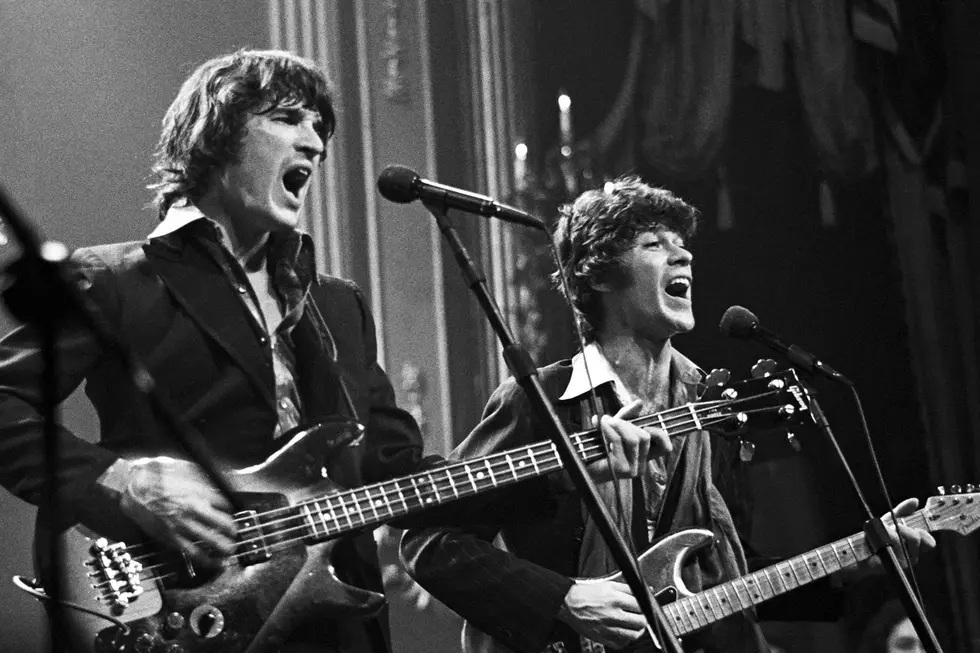
The Last Waltz might look effortless on film, the warm glow, the easy chemistry, the sense of finality you can practically feel humming off the stage, but the truth is that Martin Scorsese’s now-mythic 1978 concert movie was constantly seconds away from blowing up. The Band’s farewell show on Thanksgiving night, Nov. 25, 1976 at Winterland, is now cemented as a cultural treasure. At the time, it was a house of cards.
Everyone remembers Rick Danko’s wounded sweetness and Robbie Robertson’s charismatic command, but two figures defined the chaos behind the scenes: Bob Dylan, who almost didn’t go on, and Levon Helm, who didn’t want to be there in the first place. And yet both ended up giving the film the fire it needed.
Helm’s vocals, rough, raw, deeply human, became the beating heart of the night. Ironically, the man most opposed to the production is the one whose performance is the least touched. Literally. Band producer John Simon later revealed Helm was the only musician whose contributions didn’t get polished or patched with overdubs. What you hear from Levon is exactly what happened.
Dylan’s contribution was harder to secure. Expected at The Band’s Shangri-La studio, he simply didn’t show. Joni Mitchell turned up, couldn’t explain the tunings to her own songs, and Garth Hudson ended up reverse-engineering them on the spot. When Dylan finally arrived, he hid in a basement piano lounge. The Band ran some songs with him, but still had no idea whether he’d allow Scorsese to film anything.
And this wasn’t some minor scheduling detail. Scorsese had only secured Warner Bros. financing on the condition that Dylan appeared in the film. Without him, the entire project was dead.
The night itself was a sprawling circus. Bill Graham had insisted on a full Thanksgiving meal for the audience, 220 turkeys, 500 pounds of cranberry sauce, while The Band blasted through two hours of classics. Danko later said, “I was onstage for five and a half hours… They could do a Son of ‘The Last Waltz’ because we’ve got great material. We only used a small amount of it.”
Mid-show, Dylan arrived. Negotiations resumed. His concern? The Last Waltz might compete with his own film, Renaldo and Clara. It was only after more discussion that he agreed to let the cameras roll for the end of his set.
The first filmed moment? A sardonic, almost mocking version of “Forever Young.” No nostalgia. No sentiment. Just Dylan cutting through the evening with acid-edged defiance.
Then something magical clicked. Dylan and The Band tore into gems from their infamous 1966 electric tour, “I Don’t Believe You (She Acts Like We Never Have Met)” and “Baby, Let Me Follow You Down.” Helm recalled being utterly blindsided by the choice, assuming Dylan had realised they needed some real rock ’n’ roll in the film. Dylan snarled himself nearly hoarse.
And when the crew attempted to stop filming at the agreed cutoff, Bill Graham stormed in shouting:
“F**k you! Roll the f***ing cameras! Roll ’em!”
If not for that moment, the immortal, chaotic, euphoric “I Shall Be Released” finale might not exist.
Around the chaos swirled other legends, Van Morrison igniting the middle of the show, Muddy Waters roaring through “Mannish Boy,” Emmylou Harris bringing ethereal clarity, Danko delivering a career-best “It Makes No Difference.” Robertson unleashed razor-sharp guitar lines; Hudson shrouded everything in mystical glow.
Not everything worked. Neil Diamond felt out of place; Neil Young was simply out of it. Richard Manuel, heartbreakingly, faded into the background. And yet the miracle is that the night holds together at all.
The Band rehearsed for 12 hours straight before the concert, learning more than 20 songs they’d never played before. “Every time out of the chute, it was like throwing the dice,” Robertson said. But the chaos suited Helm and Dylan. They thrived in live combat.
Helm led some of the evening’s defining moments: the definitive “Night They Drove Old Dixie Down,” the transcendent “Weight” with the Staple Singers, a snarling “Ophelia,” and a triumphant late-night jam that eventually brought the full group back together for one final song: “Don’t Do It.”
“When it was over,” Helm said, “so was the Band.”
Robertson stepped to the mic. “Thank you, goodnight.”
Then, simply: “Goodbye.”
A farewell that almost didn’t happen, saved by accidents, arguments, and sheer will, now stands as one of the greatest concert films ever made.