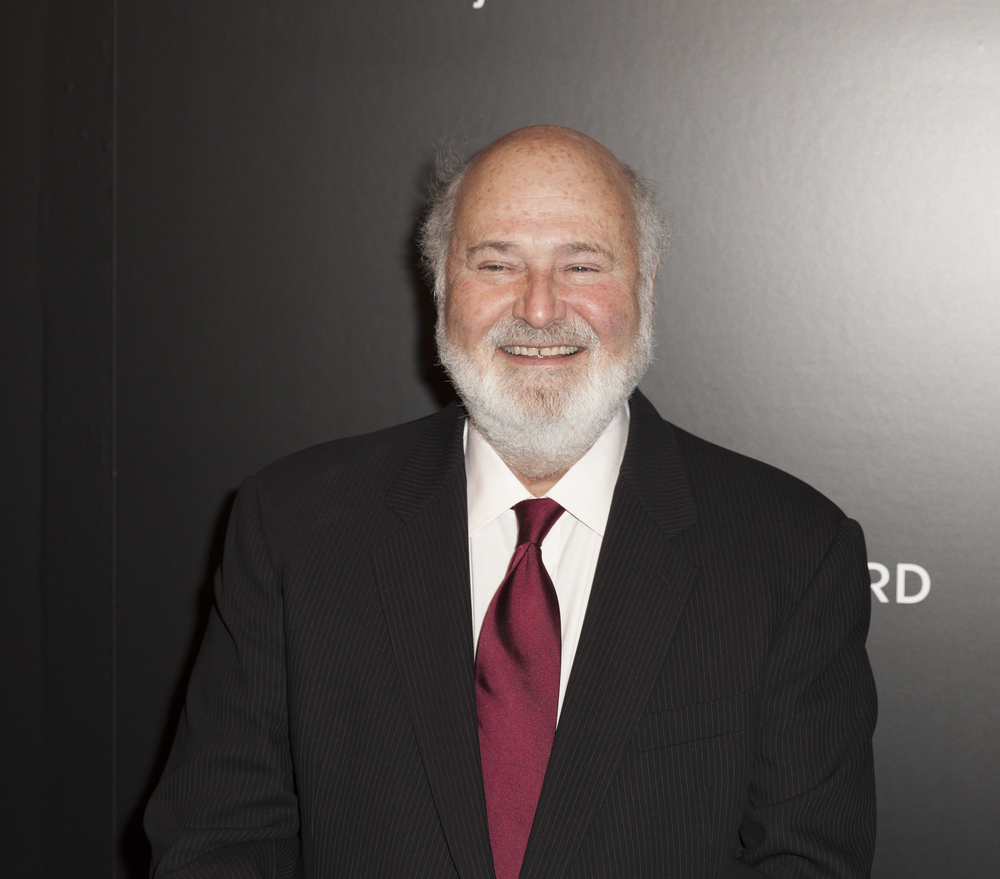

The shock surrounding the violent deaths of film director Rob Reiner and his wife, actress and photographer Michele Reiner, has rippled outward with a rare, heavy silence, the kind that follows the loss of someone whose presence felt foundational rather than merely famous. For those who knew him best, and for those shaped by his work, the language of tribute has been precise, human, and devastating.
Harry Shearer, who portrayed Derek Smalls in the Spinal Tap films, framed Reiner not as a legend but as a constant. “Rob was a friend and collaborator through much of my life,” he wrote. “He was funny, he was smart, he was a mensch.” Shearer recalled Reiner’s unmistakable laugh “uproarious and audible around the block”, and his quiet brilliance as an organiser of chaos. When ideas flew around the room, Reiner was the one who wrote them down on index cards and shaped them into a film. Creation, in this telling, wasn’t about ego. It was about listening, structure, and trust.
Shearer’s tribute also acknowledged the loss beyond the professional. Michele Reiner, he noted, was “a very good friend” to his wife. “This is unspeakable,” he concluded. “The stuff of Greek tragedy.”
That sense of stunned intimacy was echoed by Jamie Lee Curtis, speaking on behalf of herself and her husband Christopher Guest, who played Nigel Tufnel. “Christopher and I are numb and sad and shocked,” she wrote. “Our only focus and care right now is for their children and immediate families.” Curtis asked for time, not to avoid discussion, but to grieve before reflecting on “the creative lives we shared and the great political and social impact they both had.”
Paul McCartney, who worked with Reiner on Spinal Tap II: The End Continues, added a perspective shaped by recent collaboration. “What a tragedy the death of Rob Reiner and his wife Michele is,” he wrote. “He was such an upbeat, lovable man.” McCartney traced a lineage, from Carl Reiner to his son, rooted in humour, generosity, and craft. “Life can be so unfair,” he added. “I will always have fond memories of Rob.”
Alongside grief, anger has also surfaced, sharply. Jack White condemned US President Donald Trump for a social media post attacking Reiner after his death. “Trump, you disgusting, vile, egomaniac, loser, child,” White wrote. “To use someone’s tragic death to promote your own vanity and fascist authoritarian agenda is a corrupt and narcissistic sin.” His statement wasn’t performative outrage; it was a refusal to allow cruelty to sit unanswered in the wake of loss.
As the investigation continues, with Nick Reiner arrested on suspicion of the murders, what remains constant is the clarity of remembrance. Across generations and disciplines, Rob Reiner is being mourned not only for what he made, but for how he made people feel: seen, supported, and better for having worked with him.