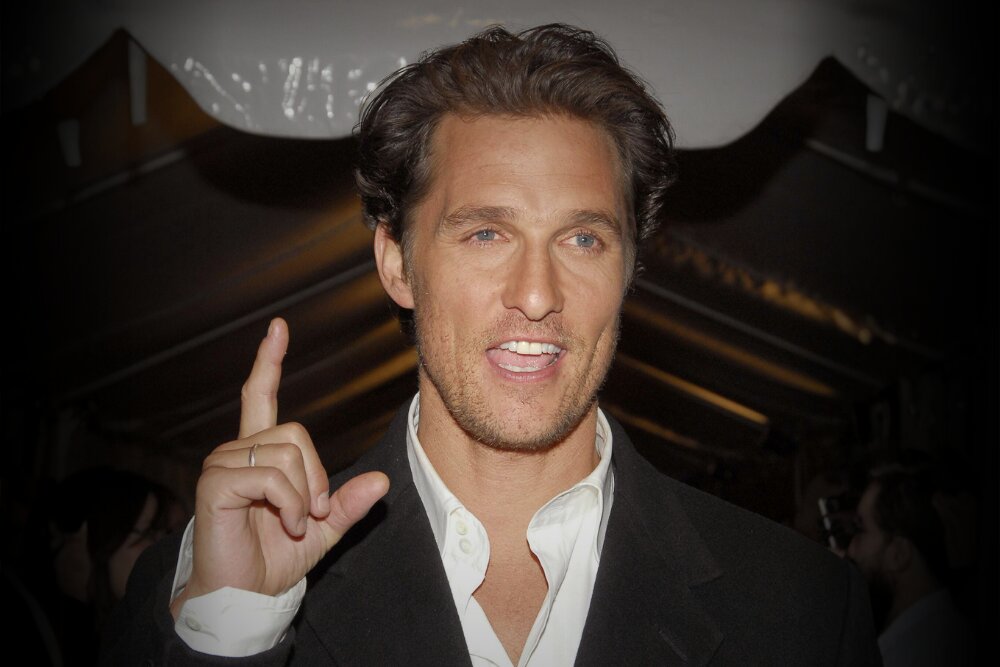

Hollywood star Matthew McConaughey has taken an uncommon step to protect himself from the growing threat of artificial intelligence misuse, filing video and audio recordings of his own image and voice with the United States Patent and Trademark Office (USPTO). The move, designed to guard against unauthorised AI impersonation and deepfakes, comes as the entertainment industry grapples with how best to balance innovation with individual rights and control over personal likeness.
The recordings were registered by the commercial arm of the Just Keep Livin’ Foundation, a non-profit started by McConaughey and his wife Camila. By formally documenting his voice and image with the USPTO — a route more typically used for trademarks and intellectual property — McConaughey aims to create a legal foothold against AI platforms that might generate likenesses of him without permission.
McConaughey’s attorney, Kevin Yorn, told the court the strategy is intended “to make sure that our clients have the same kind of protections that their businesses have.” Yorn also emphasised that the goal is not only defensive: the filings could help artists “capture some of the value” created when their image or voice is used by AI.
This concern is far from theoretical in celebrity circles. In 2023, representatives for Scarlett Johansson said she took legal action after an online advert for an AI app featured footage of her alongside an AI-generated imitation of her voice. Such incidents have fuelled a broader debate over how unregulated AI could misappropriate a person’s identity for commercial gain.
The legal landscape is beginning to respond. A handful of U.S. states have passed legislation aiming to protect individuals from malicious AI use. Most notably, Tennessee’s Ensuring Likeness Voice and Image Security (ELVIS) Act, signed in March 2024, provides more targeted protections for artists against AI cloning or impersonation — a rare statutory shield specifically aimed at performers.
But Hollywood’s resistance to unfettered AI isn’t limited to defensive filings and state laws. Industry institutions are also drawing clear lines. In 2023 the Grammy Awards confirmed that music created solely by AI would be ineligible for consideration, stipulating that only works with significant human authorship can qualify for nomination. The Recording Academy stressed that while AI tools can assist creators, the human contribution must be primary.
Actors and creators are also testing new partnerships with AI companies on their own terms. McConaughey himself has embraced a positive use case: partnering with AI audio firm ElevenLabs to produce a Spanish-language audio version of his newsletter using a synthetic version of his own voice, with his blessing, and even investing in the company.
Yet the industry remains wary. Filmmakers and writers have raised alarms about studios using AI to replicate an actor’s likeness without adequate consent or compensation, or to automate writing in ways that could undermine creative labour. Unions including SAG-AFTRA and the Writers Guild of America have demanded stronger contractual protections for members facing AI-generated work.
McConaughey’s USPTO recordings underscore a wider shift: Hollywood is no longer sitting passively as artificial intelligence evolves. As technology accelerates, actors and creators are pushing for legal, commercial and contractual frameworks that ensure their image, voice and craft remain under their control — not left to the unregulated whims of algorithms.
The Irish Government is moving swiftly to introduce new laws that would empower regulators to fine tech companies that allow harmful artificial intelligence abuses — in a move driven in part by outrage over the controversy surrounding Elon Musk’s Grok AI chatbot on X.
The proposed legislation, expected to be approved by cabinet in the coming days, would transpose the European Union’s Artificial Intelligence Act into Irish law and set out eight categories of dangerous AI use that violate fundamental rights and basic decency, according to the Irish Independent. Fines for breaches could reach €35 million or 7 per cent of a company’s annual turnover, whichever is higher, mirroring the EU’s sanctions regime.
The fast-tracked bill follows growing concern that Grok, the AI tool linked to X (formerly Twitter), has been used to generate and distribute non-consensual, sexualised and deepfake images — including depictions involving children and adults without their consent. The controversy has ignited both political and public backlash in Ireland and abroad, with regulators and lawmakers demanding stronger safeguards. In the UK, the media regulator Ofcom has opened a formal investigation into X’s handling of sexually explicit AI imagery, and Prime Minister Keir Starmer has warned that the government will intervene if the platform does not bring Grok under control.
Under the new regime in Ireland, a National AI Office is slated to be established by August to oversee enforcement of the AI Act and coordinate with existing authorities. This follows earlier progress designating key regulators, including the Data Protection Commission, Competition and Consumer Protection Commission, and Commission for Communications Regulation, to enforce the EU law’s provisions.
Enterprise Minister Peter Burke and Junior Minister for AI Niamh Smyth have said the Government wants Ireland to strike a balance between protecting fundamental rights and fostering innovation. The AI Act’s risk-based approach already bans eight high-risk AI practices across the EU, such as exploiting vulnerabilities linked to age or disability and untargeted scraping of facial images.
Critics, including civil liberties groups, have warned that enforcement bodies need more resources to carry out their duties effectively. Others have called for criminal penalties for misuse of AI tools that create exploitative or harmful content.
Locally, there have been calls from public representatives, including Dublin City Council members, to suspend official use of X due to concerns about harmful content generated by Grok, and to strengthen existing laws such as Coco’s Law to better address non-consensual AI imagery.