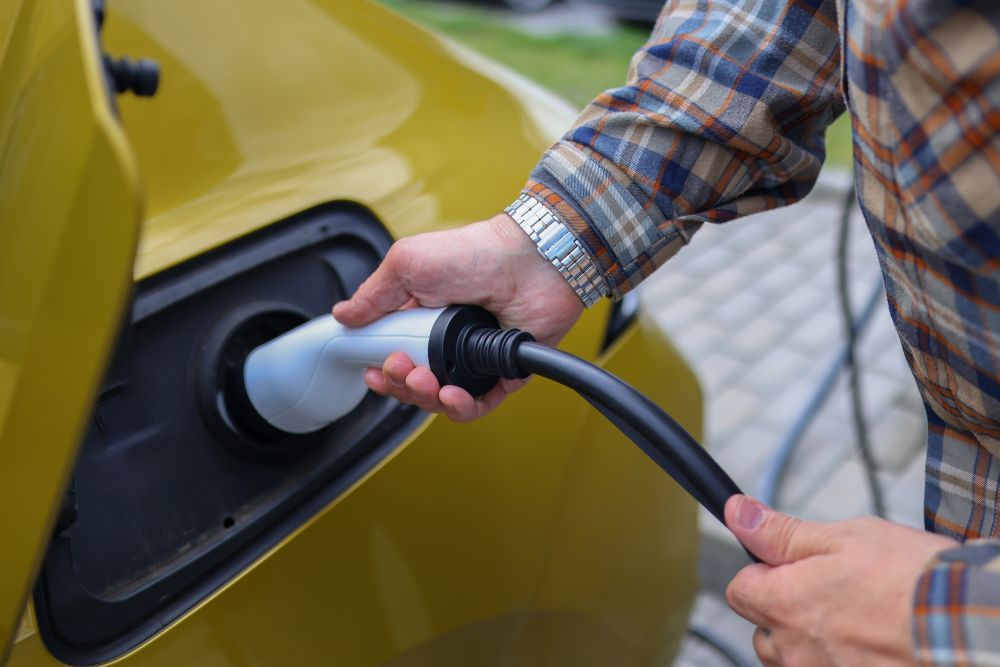

Electric vehicle owners are facing mounting costs at public charging stations, with industry figures warning that charging an EV can now cost as much as filling a conventional petrol or diesel vehicle.
Ireland’s public EV charging network has become one of the most expensive in Europe, with recent figures placing the country as the third-costliest market for public charging services.
The latest increase comes from Ionity, which operates high-speed charging points at Circle K locations nationwide. The company has announced that prices will rise from 81.5 cent per kilowatt-hour to 85 cent per kilowatt-hour, representing a 4% increase.
Ionity has attributed the latest price hike to volatility in international energy markets, including disruptions linked to tensions in the Middle East and the conflict involving the United States and Iran.
The increase has triggered concern among politicians and environmental advocates, who warn that escalating charging costs could discourage motorists from switching to electric vehicles at a time when Ireland is struggling to meet its climate commitments.
New figures released by the Central Statistics Office show that Ireland’s domestic greenhouse gas emissions fell by just 0.5% during 2024, a modest reduction that has raised questions about the pace of progress towards national emissions targets.
Green Party leader Roderic O'Gorman welcomed the reduction but expressed concern about Ireland’s ability to meet future climate goals.
"This news from the CSO is welcome; 2024 marked the end of our time in Government and I am pleased at the progress we made during our term," he said.
"However, I have real concerns that progress will be lost due to the current Minister’s admission that Ireland won’t meet its targets, and his delay in publishing this year’s Climate Action Plan."
Mr O’Gorman also warned that taxpayers could ultimately bear the financial burden of missed climate targets.
"Ultimately it is the taxpayer who will continue to pay for this Government’s inaction, firstly through increasing energy bills and then through fines to the European Union," he said.
He pointed to a recent Government decision to contribute funds to the EU Renewable Energy Financing Mechanism as evidence that Ireland may increasingly need to offset emissions by supporting renewable energy projects abroad.
The sharp rise in public charging costs has also prompted calls for greater scrutiny of the EV charging sector.
Social Democrats spokesperson for environment and energy Jennifer Whitmore has urged the Government to investigate whether excessive pricing practices are occurring within the public charging market.
"Electric vehicles are an attractive prospect for drivers for two reasons: they are more environmentally friendly than petrol or diesel vehicles, and they are cheaper to run," she said.
"While the environmental benefits remain, the cost advantage has now effectively disappeared."
Deputy Whitmore described the situation as alarming, arguing that one of the primary incentives encouraging motorists to switch to electric vehicles has been undermined.
"The cost of charging an EV at public charging points is now comparable to the cost of filling a vehicle with petrol or diesel," she said.
"This is an extraordinary development."
She also highlighted the growing gap between public charging costs and wholesale electricity prices, noting that electricity supplied through charging networks now costs substantially more than power used in Irish homes.
The latest increases are expected to intensify debate over Ireland’s transport decarbonisation strategy, with industry experts warning that affordability will remain a critical factor in persuading motorists to adopt electric vehicles in the years ahead.