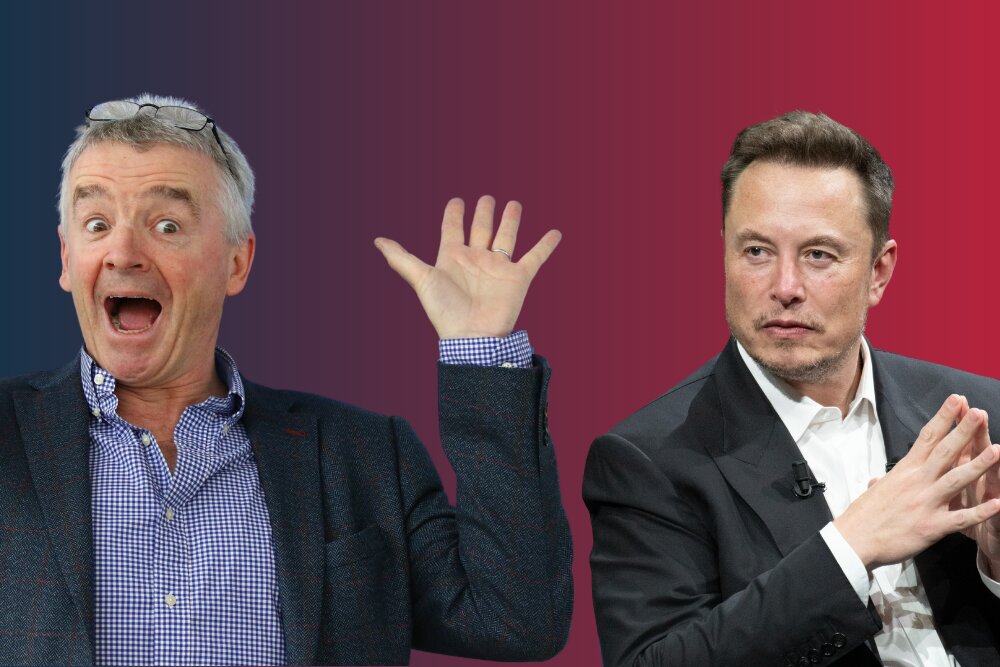

Ryanair boss Michael O’Leary says he hopes his highly publicised spat with Elon Musk “escalates”, as the airline and the billionaire tech entrepreneur continue a rare and at times personal feud that has generated global media attention.
The row began in mid-January after Ryanair publicly rejected Musk’s Starlink satellite Wi-Fi service for its fleet, arguing that the costs involved — particularly extra fuel expenses caused by antenna drag — were too high for a budget airline built on delivering the lowest possible airfares. That stance prompted Musk to hit back on social media platform X, calling O’Leary “misinformed” and later an “utter idiot” before floating the idea of buying the airline and asking followers how much it would cost to do so.
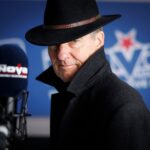
Speaking on RTÉ’s Morning Ireland this week, O’Leary said he was happy for the feud to continue, not out of animosity but for the sheer attention it has generated. “I hope it escalates,” he said. “It generated about 50 million in free publicity. If I could escalate it and extend it for another week or two, we’ll keep going. I thought it was great.” He also argued that neither side truly “won,” as both companies benefited from the coverage. “We’re both winners… We got huge amounts of free publicity for Ryanair; he got more free publicity for X,” he added.
Ryanair’s promotional response to the feud included a tongue-in-cheek “Great Idiots” sale, offering 100,000 seats for €16.99 and even extending a “free ticket” to Musk. While the pricing gag was clearly designed to poke fun, the airline has seen a measurable uptick in bookings during the controversy, with O’Leary noting a 2–3 per cent rise in sales over recent days.
At the heart of the disagreement is Ryanair’s long-standing opposition to installing satellite internet service on its aircraft. O’Leary argues that very few passengers — particularly those booking short-haul European flights — are willing to pay for Wi-Fi, and that the added weight and aerodynamic drag of external terminals could cost the airline an estimated €150m–€250m a year in fuel. Musk and Starlink engineers have countered that the penalty would be much lower, leading to a public clash of technical claims.
Despite the back-and-forth, Ryanair has not ruled out offering in-flight connectivity in the future. O’Leary recently suggested that as technology improves — particularly internal antenna systems — free Wi-Fi could become widespread within five years, provided it doesn’t compromise costs or operations.
Beyond the Musk feud, O’Leary remains outspoken on other industry issues affecting Ireland. He has repeatedly criticised the Irish Government for failing to deliver on promises to lift the passenger cap at Dublin Airport, a long-standing planning limitation that has restricted growth for nearly two decades. Ryanair has even sought legal review of flight restrictions and called for the cap to be scrapped so airlines can expand operations, arguing that the existing limit — originally imposed in 2007 — is outdated and holds back capacity growth.
The Musk-Ryanair clash, while partly playful and provocative, underscores how competitive pressures, technology adoption and public relations can intersect in the airline industry. For O’Leary, known for his blunt style and willingness to court controversy, the row with Musk appears to be as much about reinforcing Ryanair’s low-fare brand as it is about the technical merits of Starlink.