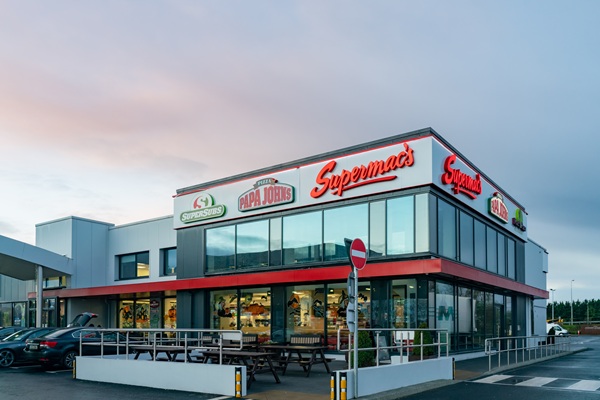

The Trademark dispute began when McDonald's argued that Supermac's could interfere with its existing products such as the "Big mac" and more.
However the UKIPO (UK intellectual Property Office) rejected those arguments. Concluding that the differences between Supermac's and McDonald's, were different enough that consumers would be able to differentiate between the brands.
Supermac’s was established by Pat McDonagh in 1978. Reflecting on the latest ruling, he said the dispute had never been about challenging McDonald’s as a business, but rather about ensuring that an Irish company could protect its own identity.
McDonagh has described the legal battle as a "David vs Goliath" kind of fight given the difference in size between the 2 companies.
According to McDonagh, the case also demonstrated that trademark disputes should be decided according to the evidence and the law rather than the financial strength, influence or profile of the companies involved.
The latest UK decision follows a major legal success for Supermac’s in June 2024, when the Court of Justice of the European Union ruled that McDonald’s had not adequately demonstrated its use of the “Big Mac” trademark in certain categories. As a result, the trademark was removed in relation to restaurant services and certain poultry products.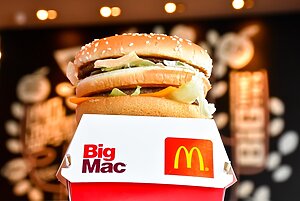
The Irish company subsequently faced a setback in a separate EU trademark case. In June, an EUIPO appeal board ruled that Supermac’s logo was too similar to McDonald’s “Big Mac” trademark to qualify for registration as an EU trademark. That decision does not prevent Supermac’s from continuing to operate under its own name in Ireland.
The EU case originated with an application submitted by Supermac’s in May 2016 seeking EU-wide trademark protection for its name in connection with fast-food restaurant services.
Supermac’s argued during the appeal that the two brands had operated alongside one another in Ireland for roughly four decades without evidence of consumers confusing them. Its lawyers questioned the logic of suggesting that someone could enter a Supermac’s restaurant expecting to buy a McDonald’s Big Mac, particularly given McDonald’s own position that the Big Mac is widely associated with its brand.
The company argued that the EUIPO decision lacked a sufficient legal and logical foundation.
McDonald’s, however, maintained that consumers could perceive a connection between restaurant brands and food products, meaning the distinction between the two could become less clear in the marketplace.
The EUIPO agreed that the products and services involved were related and aimed at the same consumers, although it considered their similarity to be relatively limited.
The appeal board also found that the “Big Mac” trademark had developed a particularly strong level of distinctiveness because of its extensive use and recognition across the European Union. It noted that a highly distinctive trademark generally receives broader protection because of the increased potential for consumer confusion.
The board further considered that consumers could potentially interpret “Supermac’s” as a new sub-brand or variation connected to the “Big Mac” range, particularly in the context of meat-based sandwiches.
It also rejected Supermac’s reliance on the two businesses having coexisted in Ireland, noting that evidence of coexistence would need to cover the wider European Union rather than being limited primarily to the Irish market.
McDonagh said he was surprised by the EUIPO outcome and indicated that Supermac’s was considering whether to pursue another appeal.
Despite that setback at EU level, he described the UKIPO decision as considerably more important for Supermac’s because of its potential implications for the company’s future business activities in Britain.